- Your cart is empty
- Continue Shopping

How to Trim Your Dog’s Nails at Home Safely
-
By Yash
- Posted on
- 0 comments
- Grooming & Hygiene
If you’re a dog owner in the UK, chances are you’ve put off nail trimming at least once. Not because you don’t care — but because it’s awkward, a bit nerve-racking, and your dog suddenly behaves like the clippers are a medieval torture device.
The truth is, learning how to trim dog nails at home isn’t as scary as it feels. With the right tools, a calm approach, and a bit of patience, most owners can do it safely without a trip to the groomer or vet.
Let’s walk through it properly — no pressure, no panic.
Why Nail Trimming Matters More Than You Think
In the UK, many dogs don’t naturally wear their nails down enough. Pavements help a little, but grassy parks, muddy trails, and soft ground don’t file nails the way people assume.
Overgrown nails can:
• Change how your dog walks
• Cause joint strain over time
• Get caught on carpets or blankets
• Split painfully (which usually happens at the worst possible time)
Good dog nail care isn’t about looks — it’s about comfort and long-term health.
Getting Your Dog Comfortable Before You Start
This is where most people go wrong. They grab the clippers first and deal with the dog second.
Before you even think about trimming:
• Let your dog sniff the clippers
• Touch their paws gently over a few days
• Reward calm behaviour with praise or treats
UK dog owners often rush this part — especially during busy weeks — but slowing down here makes everything else easier.
Choosing the Right Nail Clippers (This Matters a Lot)
Not all nail clippers are created equal. Cheap, blunt tools make the job harder and increase the risk of cutting too far.
A good pair should:
• Have a sharp blade (less pressure, cleaner cut)
• Include a safety guard to reduce over-trimming
• Feel comfortable in your hand
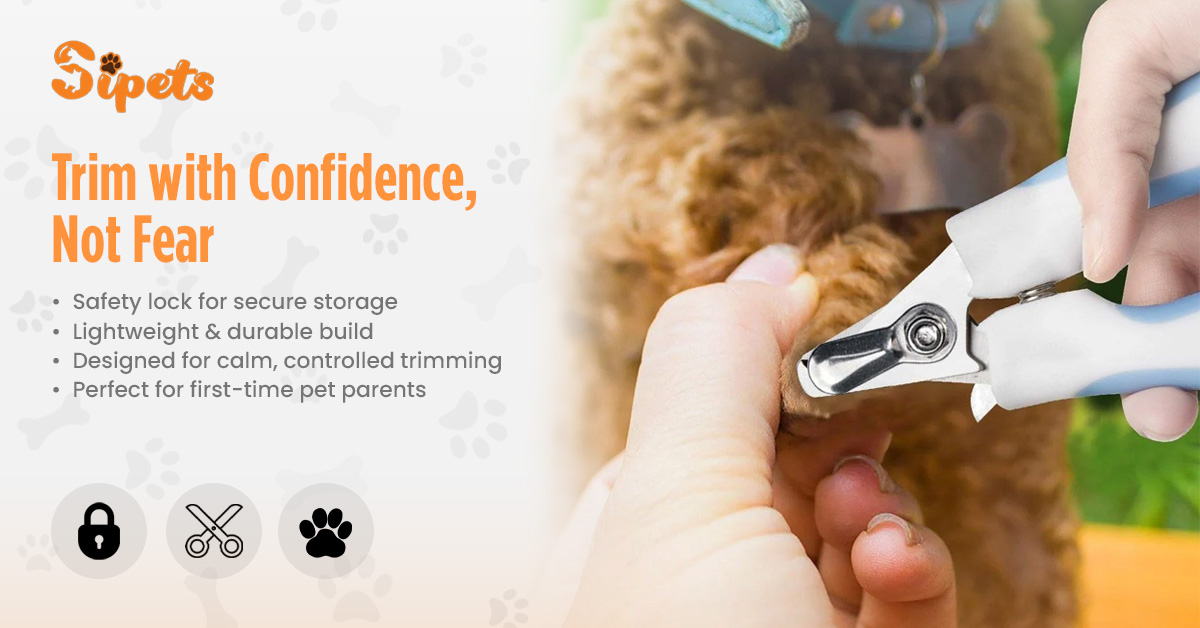
Many owners in the UK prefer professional-grade clippers designed for home use, like the ones from Sipets, because they’re sturdy, easy to control, and less intimidating for nervous dogs.
Having the right tool immediately lowers stress — for both of you.
Finding the “Quick” (And How to Avoid It)
Inside each nail is the quick — the sensitive area that bleeds if cut. On light-coloured nails, it’s easy to see. On darker nails, not so much.
A simple rule that helps:
• Trim small amounts at a time
• Stop when you see a pale, chalky centre
• If in doubt, stop early — you can always trim more later
UK vets often say it’s better to trim a little more often than to take too much off in one go.
Trimming the Nails (Calmly, One at a Time)
You don’t need to do all four paws in one sitting.
Some dogs are happy with one paw and done. That’s fine.
When trimming:
• Hold the paw firmly but gently
• Cut straight across the nail
• Avoid angled cuts
• Speak calmly — your dog reads your mood more than your words
If your dog pulls away, pause. Forcing it almost always makes the next session worse.
Smoothing the Edges After Trimming
This step is often skipped, but it makes a difference.
After trimming, nails can feel sharp. A quick file:
• Smooths rough edges
• Prevents scratching
• Makes walking more comfortable
Some clipper sets (including Sipets’ professional kits) include a nail file for this exact reason — it finishes the job properly.
What If You Cut Too Far?
It happens. Even professionals do it occasionally.
If you nick the quick:
• Stay calm
• Apply styptic powder or cornstarch
• Apply gentle pressure
• Reassure your dog
Dogs pick up on panic quickly. Staying calm helps them recover faster than the actual fix.
How Often Should You Trim Dog Nails in the UK?
There’s no one-size-fits-all answer, but most UK dogs need trimming every 3–6 weeks.
You’ll know it’s time when:
• Nails click on hard floors
• They look curved from the side
• Your dog slips slightly on smooth surfaces
Regular trimming makes each session quicker and less stressful.
When Not to Trim at Home
Home trimming is great — but it’s not always the right choice.
Consider professional help if:
• Your dog is extremely anxious
• Nails are severely overgrown
• There’s a history of injury
• Your dog has joint or paw issues
There’s no shame in that. Responsible dog nail trimming in the UK includes knowing your limits.
Why Good Tools Make Home Trimming Easier
Most people who struggle with nail trimming aren’t doing it wrong — they’re using poor tools.
Reliable, well-designed clippers:
• Give cleaner cuts
• Reduce slipping
• Improve control
• Lower the risk of injury
That’s why many UK pet owners now prefer professional-grade options from Sipets — they’re designed for real homes, not grooming salons.
Final Thoughts
Learning how to trim dog nails at home isn’t about becoming an expert overnight. It’s about confidence, patience, and having tools you can trust.
Take it slow. Reward progress. Stop before stress builds.
With regular care and the right equipment, dog nail trimming becomes just another part of looking after your pet — not something you dread.
And when it’s done properly, your dog feels the difference every time they walk.
So, if you’re planning to trim your dog’s nails at home, using the right tool makes all the difference.
Check out Sipets’ professional nail clippers with a built-in safety guard and free nail file.