- Your cart is empty
- Continue Shopping

How to Groom a Nervous Dog at Home
-
By Yash
- Posted on
- 0 comments
- Grooming & Hygiene
If you’ve ever tried to groom a nervous dog at home, you’ll know the signs straight away. The stiff body. The tucked tail. The look that says, “I don’t trust this one bit.”
For many UK dog owners, grooming isn’t difficult because of the task itself — it’s the anxiety around it. The noise of clippers, unfamiliar handling, slippery bathroom floors, or even the memory of one bad experience at the groomer can be enough to make a dog shut down.
The good news? Calm dog grooming is possible at home, even if your dog is anxious. It just requires a different mindset, a slower pace, and tools that don’t overwhelm your dog’s senses.
Let’s talk about how to do low stress grooming properly — without forcing it, rushing it, or making things worse next time.
First Things First: Why Some Dogs Hate Grooming
Before you even pick up a brush or clipper, it helps to understand why your dog is nervous.
Some dogs are sensitive to sound. Others dislike being restrained. Some simply don’t enjoy unfamiliar sensations — especially around their paws, ears, or belly. In the UK, rescue dogs are particularly prone to grooming anxiety due to unknown past experiences.
What looks like “bad behaviour” is usually fear or confusion.
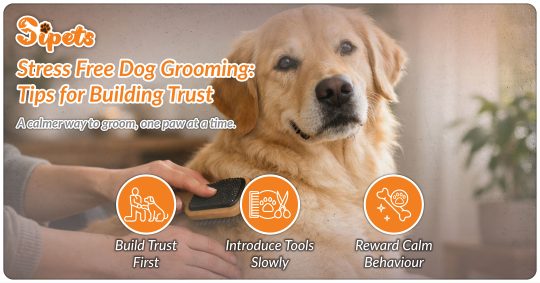
That’s why grooming a nervous dog isn’t about control — it’s about predictability and trust.
Set the Scene Before You Touch the Dog
Low stress grooming starts before grooming.
Choose a quiet time of day. No hoover running. No kids charging through the room. No pressure to “get it all done”.
Lay down a non-slip mat or towel so your dog feels steady. Sit on the floor if needed — towering over a nervous dog doesn’t help.
Most importantly, let your dog investigate the tools first. Sniffing. Watching. Walking away and coming back. All of that is part of calming dog grooming.
Nothing should feel sudden.
Short Sessions Beat “Finishing the Job”
One of the biggest mistakes people make when they groom a nervous dog is trying to do everything in one go.
You don’t need to.
Trim one paw. Stop. Praise. Walk away.
Brush the chest today. Leave the legs for tomorrow.
Dogs don’t measure success by how much fur came off — they measure it by how safe they felt.
Low stress grooming is about ending on a calm note, not a complete haircut.
Why Noise Matters More Than You Think
For nervous dogs, sound is often the deal-breaker.
Traditional clippers can be sharp, sudden, and loud — even if they don’t seem noisy to us. That high-pitched buzz can spike anxiety instantly.
This is where tool choice genuinely matters.
Many UK pet parents find grooming becomes far easier once they switch to quieter equipment designed specifically for home use.
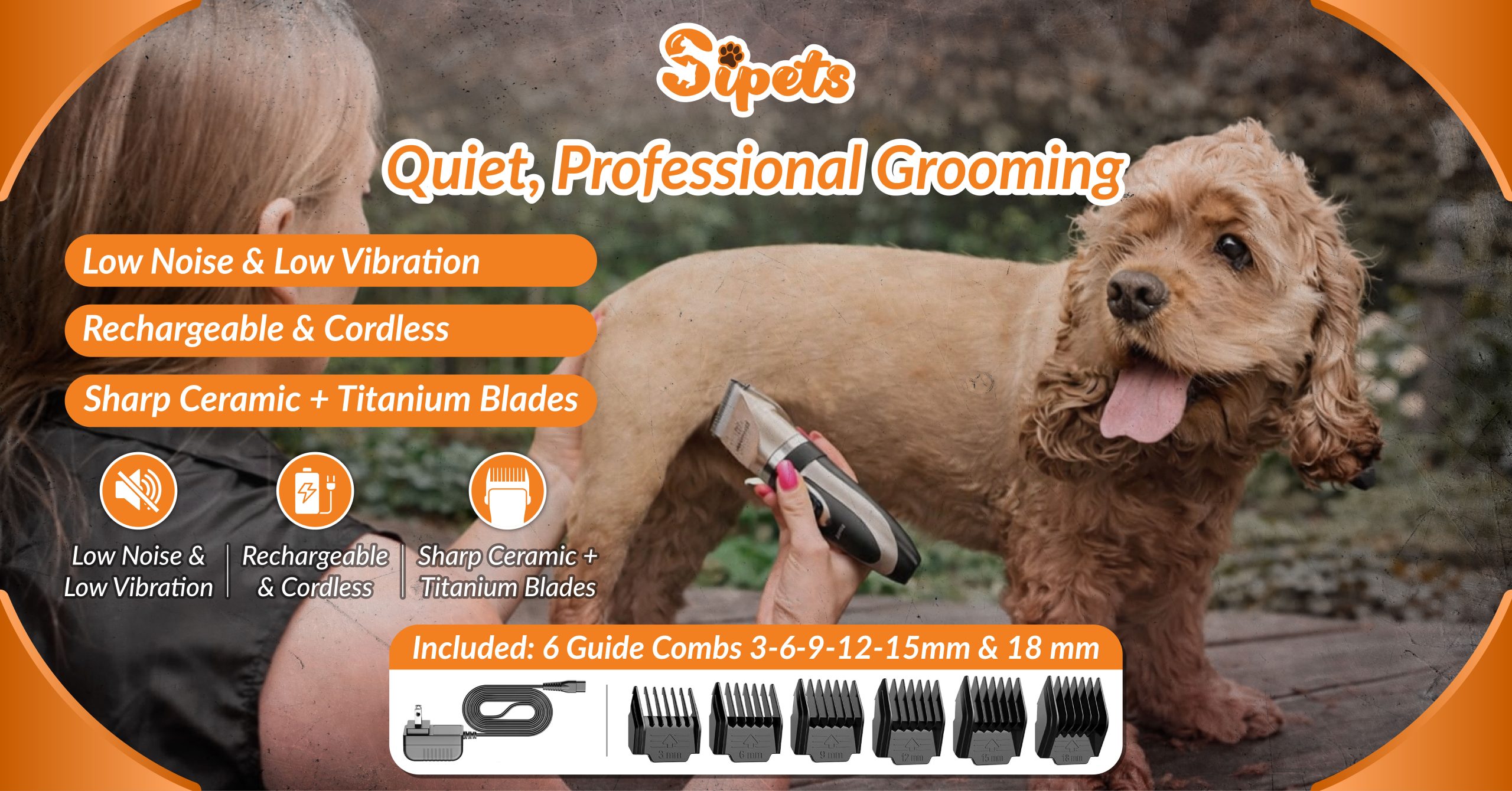
A good example is Sipets’ Low Noise Dog Clippers, which are made for sensitive dogs and produce far less vibration and sound than standard grooming tools. When a clipper doesn’t startle your dog, you remove half the stress before you even begin.
Quiet tools don’t rush your dog — and they don’t rush you either.
Touch First, Groom Second
Before clipping or brushing, spend time just handling.
Touch the paw. Release. Praise.
Lift the ear. Release. Treat.
Run the (switched-off) clipper along the body so your dog feels the shape without the sound.
This step is boring for humans — but essential for nervous dogs.
Calm dog grooming is built on familiarity, not surprise.
Read the Signals (And Respect Them)
If your dog freezes, pulls away, yawns repeatedly, or avoids eye contact — stop.
That’s not stubbornness. That’s communication.
Low stress grooming works because you listen when your dog says, “That’s enough for now.”
Stopping early builds trust. Pushing through breaks it.
You Don’t Need a “Perfect” Groom
This part matters.
Your dog doesn’t need to look like they’ve stepped out of a grooming salon. They need to feel safe in their own home.
A slightly uneven trim done calmly is far better than a perfect cut done under stress.
Over time, as your dog realises grooming doesn’t hurt and doesn’t overwhelm them, tolerance improves naturally.
Confidence grows quietly.
When Home Grooming Works Best
Grooming a nervous dog at home often works better than salons because:
• The environment is familiar
• There’s no restraint from strangers
• You control the pace
• Sessions can be split across days
With the right approach — and the right tools — home grooming becomes routine instead of dreaded.
A Final Word (And a Gentle Nudge)
If grooming has always felt stressful, it doesn’t mean your dog is “difficult”. It usually means the approach wasn’t right for them.
Slow down. Lower the noise. Reduce expectations.
And if your dog struggles with buzzing, vibration, or sudden movements, using quiet, low-stress tools like Sipets’ Low Noise Dog Clippers can make an immediate difference — especially for anxious dogs who need calm more than speed.
Grooming shouldn’t feel like a fight.
For you or your dog.