- Your cart is empty
- Continue Shopping

Puppy Grooming Guide: When & How to Start
-
By Yash
- Posted on
- 0 comments
- Grooming & Hygiene
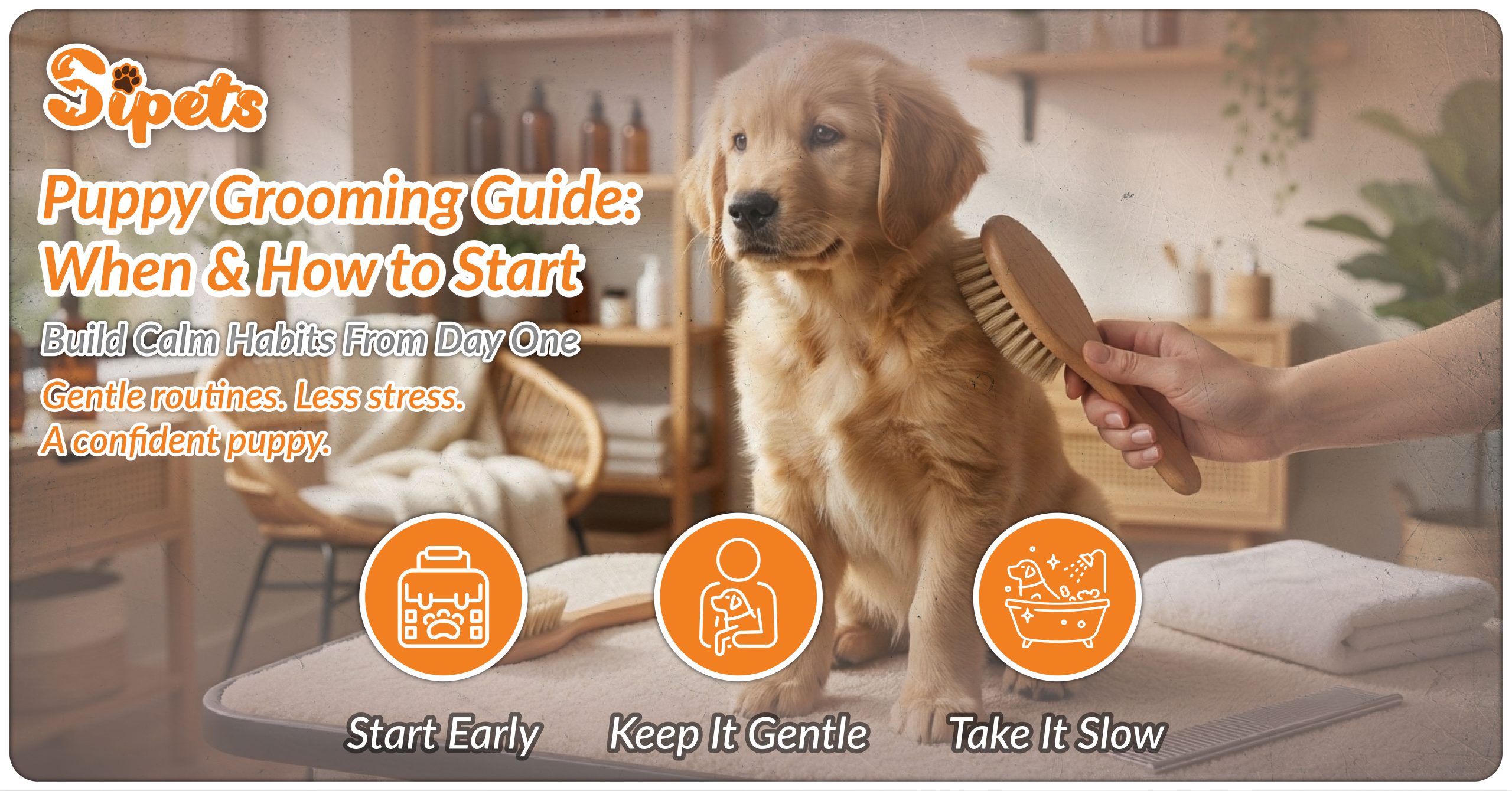
Bringing a puppy home is joyful, exhausting, and slightly chaotic. One minute you’re watching them nap peacefully, the next you’re pulling something questionable out of their mouth. In all of this excitement, grooming often feels like something you’ll “sort out later”.
But here’s the truth most new owners only realise too late: how you introduce grooming in the first few months can shape your dog’s behaviour for life.
This puppy grooming guide is written for UK puppy owners who want to get it right from the start — calmly, gently, and without turning grooming into a stressful chore.
When Should You Start Grooming a Puppy?
Many people assume grooming begins once a puppy is fully grown. In reality, it starts almost as soon as they come home.
The Best Age to Begin
Most puppies can be gently introduced to grooming from around 8 weeks old. This doesn’t mean full grooming sessions — it simply means helping your puppy get used to being touched, handled, and calmly restrained.
At this age, puppies are naturally curious and open to new experiences. If grooming feels normal early on, it rarely becomes a problem later.
Why Early Grooming Matters
Puppies that aren’t introduced to grooming until they’re older often find it overwhelming. That’s when you see:
• Fear of brushes
• Panic during nail trims
• Stress at the groomers
Starting early isn’t about appearance — it’s about confidence and trust.
How to Start Grooming Without Stress
The biggest mistake new owners make is trying to do too much, too soon.
Begin With Touch, Not Tools
Before you pick up a brush or clippers, focus on handling.
Spend a minute or two each day gently:
• Holding paws
• Touching ears
• Running your hands along their body
• Lifting the tail briefly
Keep it calm and casual. No fuss, no baby talk, no forcing.
This simple step is one of the most overlooked puppy grooming tips — and one of the most important.
Puppy Grooming Tips for Everyday Care
Brushing: Short and Positive
Even puppies with short coats benefit from brushing.
• Use a soft brush or grooming mitt
• Keep sessions under two minutes
• Stop before your puppy gets restless
Brushing should feel like a calm interaction, not a task to endure.
Bathing: Only When Needed
In the UK, puppies don’t need frequent baths.
• Bathe only when they’re genuinely dirty
• Always use puppy-safe shampoo
• Avoid getting water in the ears
Overbathing can dry out sensitive puppy skin and cause irritation.
Nail Care: Take It Slow
If there’s one part of grooming that tends to make both puppies and owners nervous, it’s nail trimming. Most of the stress comes from trying to do it too quickly, especially the first few times.
Before you even think about clippers, get your puppy comfortable with having their paws touched. A few seconds each day is enough — lift a paw, give it a gentle squeeze, then let go. Nothing dramatic.
When you do start trimming, keep it simple. One nail is plenty for a single session. If your puppy wriggles or looks unsure, stop there. There’s no rush, and there’s no prize for getting them all done in one go.
You’re not aiming for perfect nails straight away. You’re building trust. The confidence comes naturally when your puppy realises nothing bad happens.
Creating a Calm Grooming Routine at Home
Timing Really Does Matter
Grooming is much easier when your puppy is already relaxed. Trying to brush or trim a high-energy puppy usually ends in frustration for everyone.
The easiest moments are often:
• After a walk
• Once playtime has finished
• Just before they settle down for a nap
At these times, your puppy is more likely to sit still and accept what you’re doing.
It’s best to avoid grooming when they’re overtired, overexcited, or full of pent-up energy. A calm puppy is far more open to new experiences — and grooming should always feel like one of those calm, everyday moments.
Rewards Should Support Calm Behaviour
Treats are helpful, but they shouldn’t turn grooming into a negotiation.
• Reward calm behaviour
• Use small treats sparingly
• Keep praise low-key and reassuring
The goal is calm acceptance, not distraction.
When Should Puppies Visit a Professional Groomer?
First Grooming Visits in the UK
Most UK groomers recommend a puppy’s first visit between 12 and 16 weeks, depending on breed and vaccinations.
Early visits are usually:
• Short
• Gentle
• Focused on familiarity
Your puppy doesn’t need a full groom — they need a positive experience.
Choosing the Right Groomer
A good groomer will:
• Offer puppy introduction sessions
• Avoid forcing nervous puppies
• Communicate clearly with you
If a groomer rushes or dismisses concerns, it’s okay to look elsewhere.
Grooming Needs Vary by Breed
Every puppy is different, and grooming should reflect that.
Short-Coated Puppies
• Minimal brushing
• Occasional baths
• Regular nail checks
Long or Curly-Coated Breeds
• Frequent brushing
• Early mat prevention
• Earlier professional grooming
A good puppy grooming guide adapts to the dog — not the other way around.
Common Puppy Grooming Mistakes
Even loving owners make these mistakes:
• Trying to groom for too long
• Forcing a frightened puppy
• Using adult grooming products
• Avoiding grooming until problems appear
Consistency matters far more than technique.
Final Thoughts: Grooming Is About Trust
Grooming isn’t really about brushes, baths, or tidy paws. It’s about teaching your puppy that being handled is safe and predictable.
With patience, gentle routines, and realistic expectations, grooming becomes just another normal part of life — not a fight, not a fear.
Follow these puppy grooming tips, start early, and stay calm. Your future self (and your dog) will be grateful for it.