- Your cart is empty
- Continue Shopping

How to Make Grooming a Positive Experience for Dogs
-
By Yash
- Posted on
- 0 comments
- Grooming & Hygiene
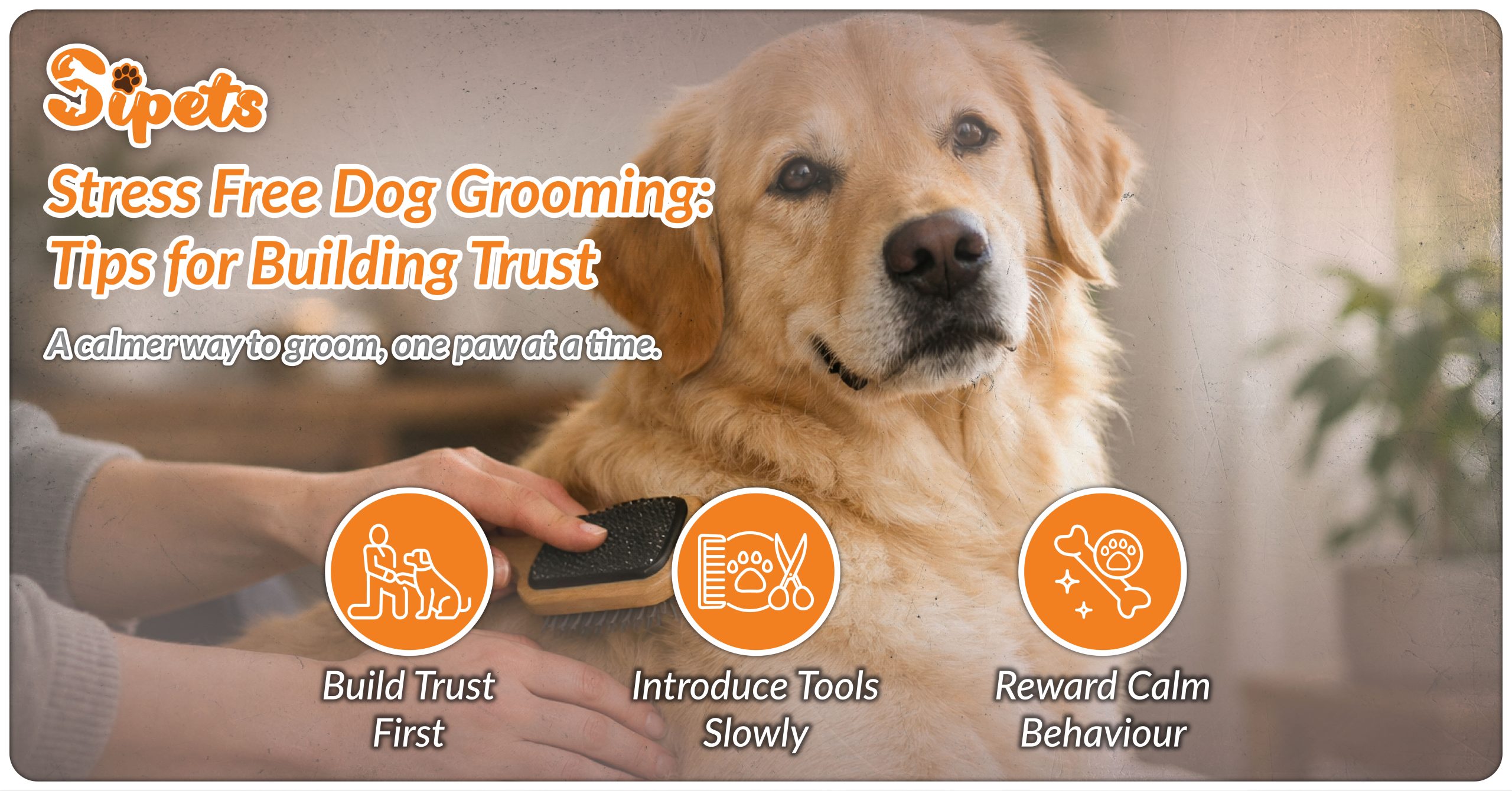
Let’s be honest, grooming isn’t every dog’s idea of a good time. For some dogs, it’s just mildly annoying. For others, it can feel genuinely upsetting. If you’ve ever tried brushing a dog who clearly wants no part of it, you’ll know how quickly things can become tense for both of you.
The good news is that grooming doesn’t have to feel like a struggle. With the right approach to dog grooming training, it’s absolutely possible to turn grooming into something calm, predictable and far less stressful. It won’t happen overnight — and that’s completely fine. The aim isn’t perfection. It’s comfort, trust, and steady progress.
Why Grooming Feels So Stressful for Dogs
Before you can make grooming easier, it’s worth stepping into your dog’s world for a moment and seeing it from their side.
It’s Not Natural to Them
To a dog, grooming is a very strange situation. Odd-looking tools appear out of nowhere. There are unfamiliar noises, unfamiliar sensations, and then they’re asked to stand still while someone touches areas that normally feel quite personal — paws, ears, faces and tails.
For most dogs, that’s a lot to cope with at once.
If a dog hasn’t been gently introduced to grooming over time, it makes complete sense that they’d feel uneasy. They’re not being difficult or “naughty”. They’re responding to something that feels confusing, unpredictable and slightly threatening in the moment.
Past Experiences Really Do Stick
Dogs have long memories when it comes to how something made them feel. One rushed nail trim, one painful tug with a brush, or one moment where they felt restrained can linger far longer than we realise.
Even if it happened months or years ago, that uncomfortable memory can resurface every time grooming tools come out. That’s why patience matters so much. Rebuilding trust — slowly and calmly — is at the heart of truly stress free grooming.
Start With Trust, Not Tools
One of the biggest mistakes people make is focusing too much on the grooming tools themselves. Brushes, clippers and nail trimmers matter — but trust matters more.
Before you even think about grooming properly, spend time getting your dog comfortable with being handled.
Gentle Handling Comes First
Touch your dog’s paws, ears and legs briefly during calm moments — not just when grooming is about to happen. Keep it casual. A few seconds here and there is enough.
This helps your dog learn that being touched doesn’t always lead to something unpleasant.
Keep Grooming Sessions Short and Predictable
Long grooming sessions are overwhelming, especially for dogs who are already nervous.
Small Sessions Work Best
Five minutes is often more than enough. You don’t need to do everything in one go. Brushing today, nail trimming another day, ears later in the week — that’s perfectly fine.
Short, predictable sessions are the foundation of stress free grooming.
Timing Makes a Huge Difference
Grooming is much easier when your dog is already relaxed. The best time is usually:
- After a walk
- After playtime
- Before a nap
Avoid grooming when your dog is overtired, overstimulated or bursting with energy.
Introduce Tools Slowly
From your dog’s perspective, grooming tools can feel intimidating. Rushing this stage often creates long-term anxiety.
Let Your Dog Investigate
Before using a brush or clippers, let your dog sniff them. Place the tool nearby during calm moments. Don’t switch it on straight away.
If clippers are involved, let your dog hear the sound from a distance first. Gradual exposure builds confidence far better than sudden surprises.
Nail Care: Take It Slow
Nail trimming causes more stress than almost any other grooming task — mainly because it’s rushed.
Start by simply touching your dog’s paws regularly. When you’re ready:
- Trim one nail at a time
- Stop immediately if your dog becomes uneasy
- Don’t aim for perfection
Confidence grows gradually. One nail today is still progress.
Rewards Should Reinforce Calmness
Treats can help — but they shouldn’t be used to bribe or distract.
Instead, reward calm behaviour after it happens. Quiet praise, gentle strokes, and the occasional treat help your dog connect grooming with positive outcomes, rather than feeling overwhelmed.
Over time, this builds genuine confidence, not just tolerance.
Read Your Dog’s Signals
Your dog will always tell you how they’re feeling — you just need to notice.
Signs Your Dog Needs a Break
- Turning their head away
- Licking lips repeatedly
- Tensing their body
- Trying to move away
Stopping when you see these signs teaches your dog that grooming isn’t something they’re trapped in. That sense of control makes a huge difference.
When Extra Help Is the Right Choice
Sometimes, no matter how patient you are, grooming still feels like too much for your dog — and that isn’t a failure on your part. Some dogs carry genuine fear around grooming, often because of earlier experiences that felt rushed, uncomfortable, or simply overwhelming at the time.
In those situations, getting a bit of extra help can actually be the kindest option. A good groomer or trainer who understands gentle dog grooming training won’t try to force progress. They won’t rush, pin your dog down, or brush off the warning signs. Instead, they’ll slow everything right down, work in short stages, and let your dog set the pace.
For many dogs, having someone calm, experienced and neutral involved can ease anxiety in a way that’s hard to achieve at home alone. It’s not about handing responsibility over — it’s about giving your dog the best chance to feel safe again.
Final Thoughts: Grooming Should Feel Safe
Making grooming a positive experience isn’t about doing everything perfectly or ticking boxes. It’s about patience, consistency, and listening to your dog.
If grooming feels quieter, slower and less tense than it used to, that’s real progress. Those short, gentle sessions — even when they don’t seem like much — build trust over time. Slowly, grooming becomes something your dog can manage, rather than something they fear.
And honestly, that sense of safety and trust matters far more than perfectly trimmed nails or a flawless coat.