- Your cart is empty
- Continue Shopping

How to Train Your Dog to Walk Without Pulling
-
By Yash
- Posted on
- 0 comments
- Training & Behaviour
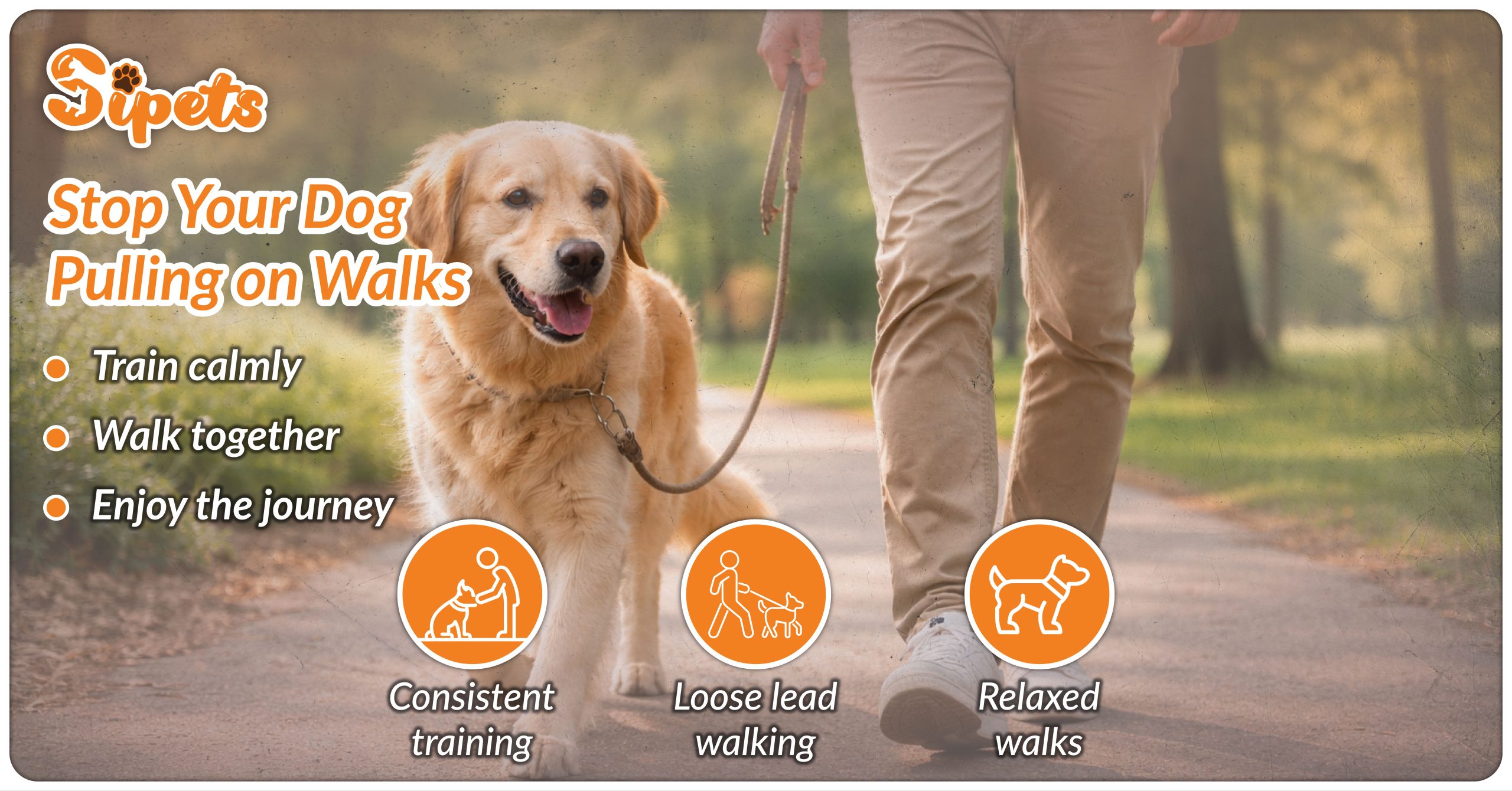
If walking your dog feels more like being dragged down the pavement than enjoying a peaceful stroll, you’re not alone. Plenty of dog owners start out imagining calm walks and end up with sore arms, frayed nerves, and a dog that seems determined to sprint everywhere at once.
The good news? You can stop dog pulling leash behaviour. It doesn’t require shouting, yanking, or special tricks — just patience, consistency, and the right kind of dog walking training.
This isn’t about turning your dog into a robot. It’s about teaching them how to walk with you, not against you.
Why Dogs Pull on the Lead in the First Place
Before trying to fix the problem, it helps to understand why it’s happening.
Dogs don’t pull because they’re being naughty. They pull because walking on a lead doesn’t come naturally to them.
The World Is Exciting — And They Want to Get to It
Smells, sounds, other dogs, people, squirrels… it’s all happening at once. Your dog wants to reach everything immediately, and the lead becomes the only thing stopping them.
To them, pulling works. They pull, they move forward. Simple.
Most Dogs Were Never Taught Otherwise
Loose-lead walking isn’t instinctive. It’s a learned skill. If your dog hasn’t been shown how to walk nicely, they’ll do what feels logical — forge ahead.
Start Dog Walking Training Somewhere Calm
Trying to fix pulling on a busy street is like teaching a child maths in the middle of a party.
Start somewhere boring.
Choose the Right Environment
Begin indoors, in your garden, or on a quiet pavement. Fewer distractions mean your dog can actually focus on you.
Once they understand what’s expected, you can gradually introduce busier routes.
Teach Your Dog That Pulling Gets Them Nowhere
This is one of the simplest — and most effective — changes you can make.
Stop Moving When the Lead Goes Tight
The moment your dog pulls, stop walking. Don’t yank the lead. Don’t say anything dramatic. Just stop.
When the lead loosens again, carry on.
It may feel slow at first. That’s normal. But your dog quickly learns that pulling doesn’t work anymore — loose lead walking does.
Reward the Behaviour You Want to See
Dogs repeat what works.
If walking calmly by your side brings good things, they’ll choose that behaviour more often.
Keep Rewards Low-Key
You don’t need constant treats. Quiet praise, a gentle “good dog”, or a small treat now and then is enough.
Reward calm walking as it happens, not after the lead has gone tight.
Keep Walks Short While You’re Training
Long walks with constant pulling just reinforce bad habits.
Quality Over Distance
It’s far better to do a short, calm walk than a long, stressful one. As your dog improves, you can gradually increase distance.
Think of training walks as practice sessions, not exercise marathons.
Use the Right Equipment (But Don’t Rely on It)
Some tools can help — but no lead or harness replaces training.
A well-fitted harness or standard lead is fine. Avoid anything designed to cause discomfort. Training should feel safe and fair, not intimidating.
Equipment supports dog walking training — it doesn’t replace it.
Be Consistent (This Matters More Than Anything)
If pulling works sometimes and not others, your dog will keep trying.
Everyone Needs to Follow the Same Rules
If one person allows pulling and another doesn’t, progress slows right down. Agree on a single approach and stick to it.
Consistency is what helps you truly stop dog pulling leash behaviour for good.
Expect Progress — Not Perfection
Some days will feel great. Other days will feel like you’ve gone backwards.
That’s normal.
Dogs have off days just like we do. What matters is the overall direction, not individual walks.
Final Thoughts: Calm Walks Are Built, Not Forced
Teaching your dog to walk without pulling isn’t about control. It’s about communication.
When your dog understands what you’re asking — and trusts that walking with you is safe and rewarding — everything changes. Walks become calmer, quieter, and far more enjoyable for both of you.
With steady dog walking training, patience, and realistic expectations, you can stop dog pulling leash behaviour — and finally enjoy walking together instead of wrestling your way down the street.
And honestly? That makes every step worth it.