- Your cart is empty
- Continue Shopping

Headcollar vs Harness: Which Is Better for Your Dog?
-
By Yash
- Posted on
- 0 comments
- Training & Behaviour
If you’ve ever stood outside your front door, lead in hand, already tired before the walk has even started — you’re not alone.
Dog walking should be the easy bit. But when your dog pulls, lunges, or zigzags like they’ve had three espressos, suddenly everyone has an opinion.
“Use a harness.”
“No, headcollars are better.”
“Harnesses make pulling worse.”
“Headcollars are cruel.”
So… which is it?
The truth is, the headcollar vs harness debate isn’t as black and white as people make it sound. And choosing the right dog walking gear isn’t about following trends — it’s about what actually works for your dog.
Why Walking Gear Matters More Than You Think
What your dog wears on a walk affects far more than just control.
It affects:
- how safe you feel
- how comfortable your dog is
- how much frustration builds on both ends of the lead
The wrong setup can turn walks into a daily battle. The right one can quietly change everything.
What a Headcollar Actually Does
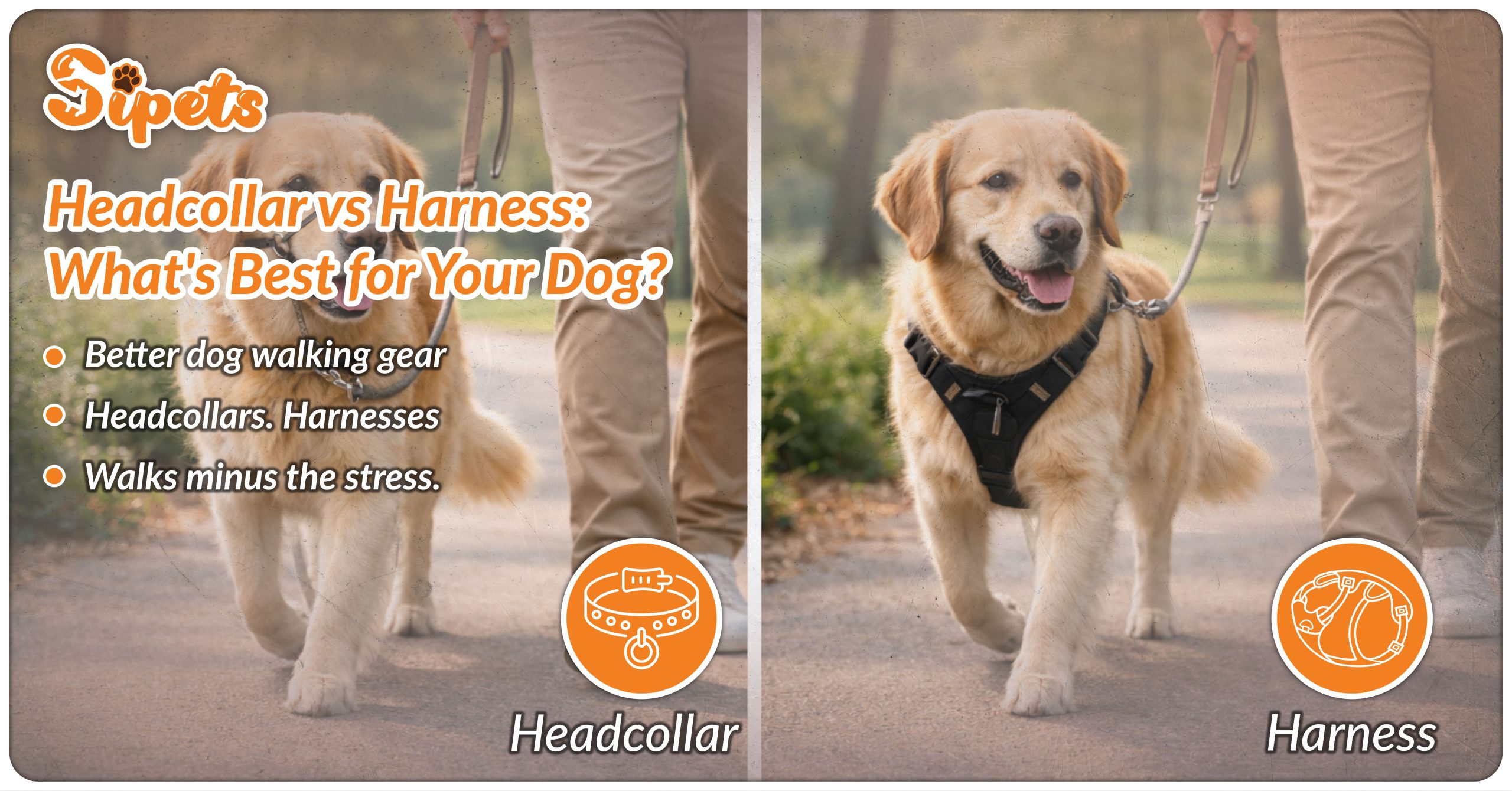
A headcollar sits over your dog’s nose and behind their ears, a bit like a horse halter. When your dog pulls, their head gently turns back towards you instead of letting them throw their weight forward.
Used properly, it doesn’t rely on strength — it relies on direction.
A training-focused option like an Adjustable non-pull dog headcollar is designed to give guidance rather than force.
When Headcollars Can Help
Headcollars often suit:
- big, strong dogs who pull hard
- owners who need more control quickly
- busy walking areas where safety matters
They can be especially helpful when you’re working on training but need walks to be manageable now, not six months down the line.
The Honest Downsides
Not every dog likes something on their face. Some will paw at it, rub it along the pavement, or look deeply offended.
That doesn’t mean headcollars are wrong — it just means they need time, patience, and a gentle introduction. They’re not something you slap on five minutes before a walk and expect miracles.
Why So Many People Choose Harnesses
Harnesses sit around the chest and shoulders, spreading pressure across the body instead of concentrating it on the neck.
Many dogs immediately feel more comfortable in one — especially nervous dogs or those who’ve had unpleasant experiences with collars in the past.
A well-designed option like a no-pull adjustable dog harness gives control without restricting movement or causing strain.
The “Harnesses Encourage Pulling” Myth
You’ll hear this a lot. And honestly? It’s only half true.
A badly fitted harness plus no training can allow pulling to continue — but so can any walking gear. A harness doesn’t teach pulling. It just doesn’t prevent it on its own.
Used alongside proper dog walking training, a harness can be calm, comfortable, and effective.
So… Headcollar vs Harness — Which One Wins?
Here’s the human answer: neither wins outright.
- Some dogs respond brilliantly to a headcollar
- Others shut down or fight against it
- Some relax instantly in a harness
- Others need extra guidance to stop pulling
The best dog walking gear is the one that:
- keeps your dog comfortable
- keeps you safe
- makes walks feel less stressful
Can You Switch or Use Both?
Absolutely — and many people do.
Some owners use a headcollar temporarily while teaching loose-lead walking, then move to a harness once pulling improves. Others use a harness for relaxed walks and a headcollar for busy areas.
There are no rules carved in stone.
Introducing New Gear Without Drama
Whatever you choose, don’t rush it.
Let your dog sniff it.
Put it on indoors first.
Reward calm behaviour.
Keep early walks short.
Confidence grows through repetition, not pressure.
Final Thoughts: There’s No “Wrong” Choice
The headcollar vs harness debate doesn’t need sides. What matters is finding dog walking gear that works for you and your dog — not what strangers at the park think.
If your dog seems comfortable, walks feel calmer, and you’re not dreading stepping outside anymore, you’re doing it right.
That’s the goal.
Not perfection — just better walks, one lead at a time.