- Your cart is empty
- Continue Shopping

Dog Bowl Hygiene Risks
-
By Yash
- Posted on
- 0 comments
- Uncategorized
Dog bowls are one of those everyday items we all take for granted. They get filled, emptied, topped up, nudged across the floor, and refilled again — often without much thought in between.
And that’s completely normal.
But because dog bowls are used multiple times a day, every day, they can quietly become one of the least hygienic items in the house if they’re not cleaned often enough. Not in a dramatic, headline-grabbing way — just in the slow, everyday build-up that happens when routines get busy.
This guide isn’t about fear-mongering or horror stories. It’s about understanding what actually lives in dog bowls, whether dirty bowls can affect your dog’s health, and how to spot the signs that it’s time for a proper clean.
What bacteria live in dog bowls?
Dogs explore the world with their mouths. That’s not a criticism — it’s just how they’re wired.
When your dog drinks or eats, their bowl can collect bacteria from:
- Their mouth and saliva
- Food residue
- Water left standing
- The floor or feeding area
Some of the most commonly found bacteria in dog bowls include:
- E. coli
- Salmonella
- Staphylococcus
- Listeria
Before alarm bells go off, it’s important to say this clearly:
The presence of bacteria doesn’t automatically mean danger.
Dogs have stronger stomachs than we do, and they’re exposed to bacteria daily. Problems tend to arise not from one missed clean, but from consistent build-up over time, especially in warm or damp conditions.
Can dirty bowls actually make dogs sick?
Sometimes — but not as often or as dramatically as the internet might suggest.
Dirty bowls can contribute to:
- Mild stomach upsets
- Reduced appetite
- Vomiting or loose stools (especially in puppies or older dogs)
- Skin irritation around the mouth or chin
Dogs most at risk tend to be:
- Puppies with developing immune systems
- Senior dogs
- Dogs with allergies or sensitivities
- Pets recovering from illness
For healthy adult dogs, issues usually appear gradually rather than suddenly. That’s why bowl hygiene is more about prevention than reacting to illness.
Signs your dog’s bowl needs cleaning
You don’t need lab tests to know when a bowl needs attention. Most signs are obvious once you start looking for them.
Watch out for:
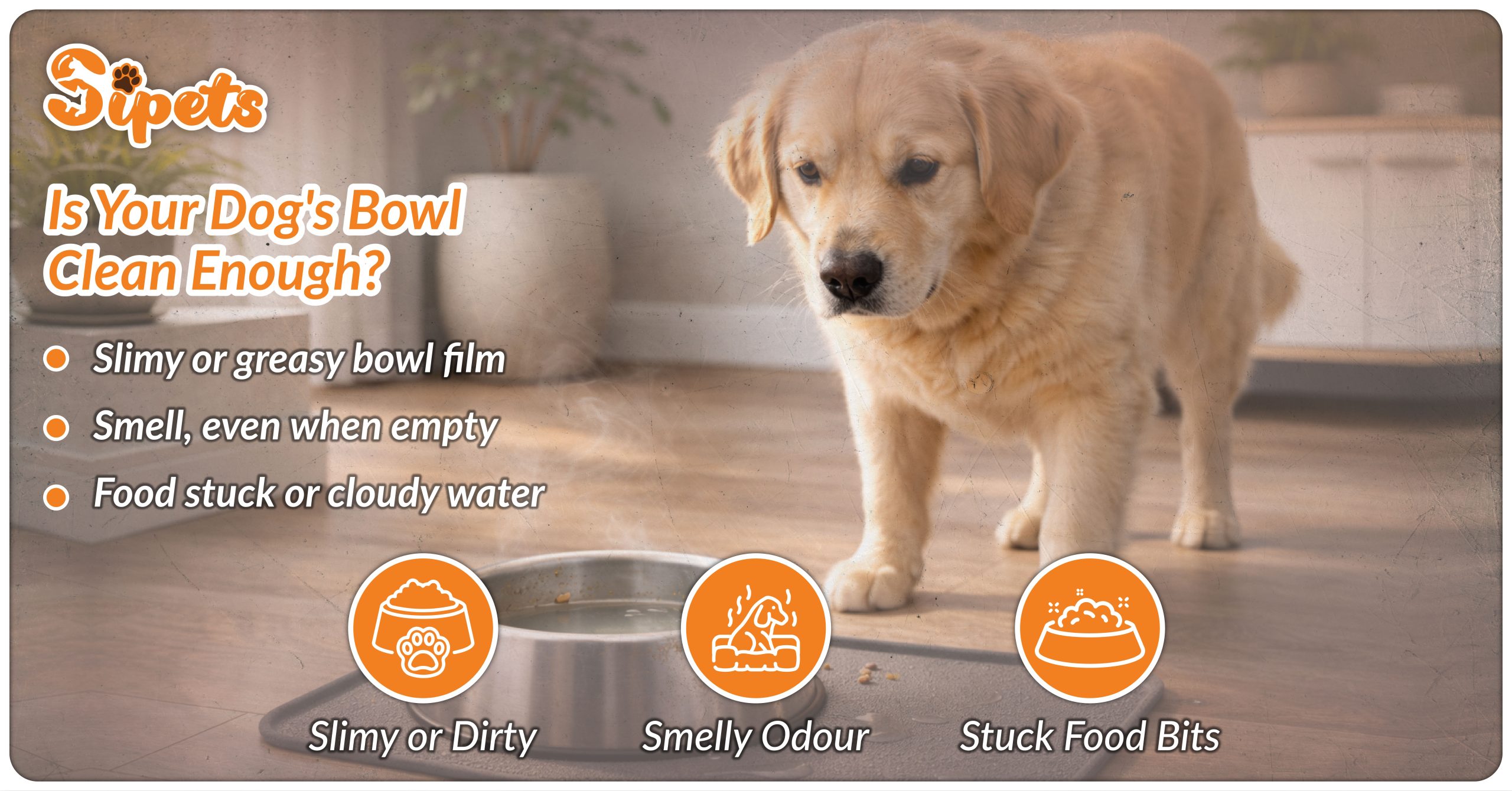
- A slimy or greasy film on the bowl
- A smell, even when empty
- Food stuck to the sides or base
- Water bowls that look cloudy
- Bowls that feel sticky to the touch
If you wouldn’t want to drink from it yourself, it’s probably time to clean it.
Water bowls are often the bigger issue
Food bowls get washed more often simply because we notice them sooner. Water bowls, on the other hand, are easy to forget.
Standing water can:
- Collect dust and hair
- Develop biofilm (the slippery layer you sometimes feel)
- Warm up and encourage bacterial growth
As a general rule, water bowls should be refreshed daily, even if they look clean.
How often should dog bowls be cleaned?
There’s no single “perfect” rule, but these guidelines work well in most UK homes:
- Food bowls: Wash after every meal
- Water bowls: Rinse daily, wash properly every 1–2 days
- Outdoor bowls: Clean more often due to dirt, insects and weather
A quick wash with warm water and washing-up liquid is usually enough. No harsh chemicals needed.
Does the bowl material make a difference?
Yes — quite a bit.
Stainless steel
- Easy to clean
- Doesn’t absorb smells
- Very hygienic when washed regularly
Ceramic
- Fine if glazed properly
- Chips or cracks can harbour bacteria
- Needs regular inspection
Plastic
- Lightweight and affordable
- Scratches easily
- Can hold onto smells and bacteria over time
This is why many pet owners switch away from older plastic bowls once they start focusing on hygiene.
What about the feeding area itself?
Bowls don’t exist in isolation.
Food spills, splashed water and dropped kibble can spread bacteria to:
- Floors
- Skirting boards
- Rugs
- Nearby walls
Using a bowl mat, particularly a silicone one, helps contain mess and makes daily cleaning much easier. Instead of scrubbing the floor, you wipe or rinse the mat — which often means the whole area stays cleaner overall.
Hygiene without becoming obsessive
It’s worth saying this clearly:
You don’t need to sterilise your dog’s bowl like hospital equipment.
Good hygiene is about:
- Regular cleaning
- Simple habits
- Not letting build-up become the norm
If you’re washing bowls as part of your daily routine and keeping the feeding area tidy, you’re already doing enough.
Final thoughts: small habit, big difference
Dog bowl hygiene isn’t about fear. It’s about awareness.
Clean bowls:
- Support digestion
- Reduce unnecessary bacteria
- Make feeding areas more pleasant
- Protect floors and surfaces
- Support long-term health, especially for sensitive dogs
Like most pet care routines, it’s not about perfection — just consistency.
FAQs
Can dirty bowls affect humans too?
Yes. Bacteria can transfer through handling bowls, especially in kitchens.
Is rinsing enough or do I need soap?
Rinsing helps, but washing with soap removes grease and bacteria more effectively.
Should I clean bowls in the dishwasher?
If the bowl is dishwasher-safe, that’s perfectly fine.
Do outdoor bowls need extra cleaning?
Yes. They’re exposed to insects, dirt and weather, so clean them more often.
Is using a bowl mat really necessary?
Not essential, but it helps contain spills and keeps feeding areas cleaner.