- Your cart is empty
- Continue Shopping

Elevated Dog Bowls for Senior Dogs
-
By Yash
- Posted on
- 0 comments
- Uncategorized
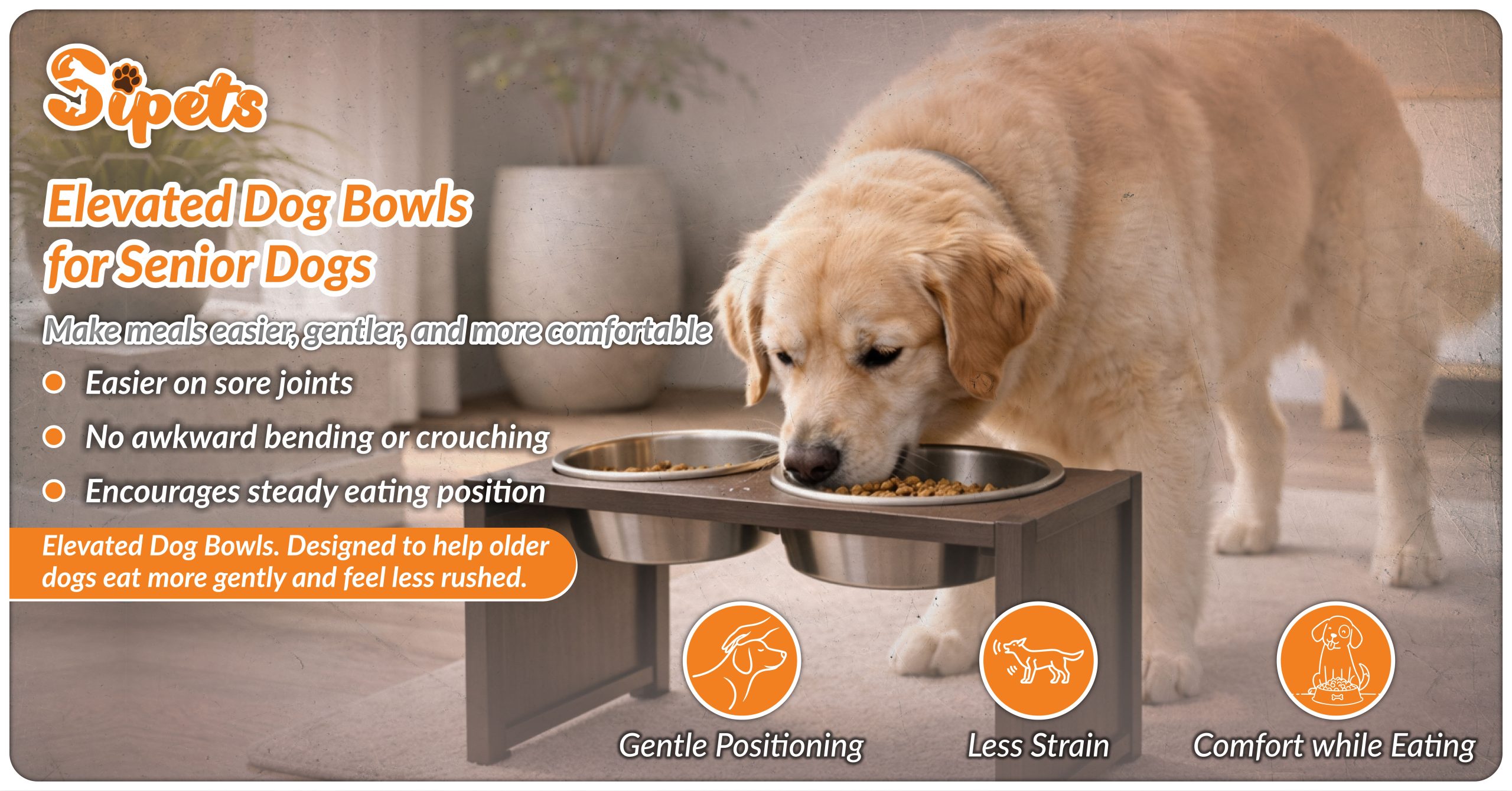
There comes a point when you notice it without really meaning to.Your dog takes a little longer to lie down. They hesitate before standing back up. They still love their food, but bending all the way down to the bowl suddenly looks… uncomfortable.
That’s usually when people start wondering whether small changes might help — and elevated dog bowls for senior dogs often come up in that conversation.
They’re not a miracle fix, and they’re certainly not about “spoiling” your dog. For many older dogs, they’re simply a more comfortable way to do something they still need to do every day.
Are Raised Bowls Good for Senior Dogs?
For Many Older Dogs, Yes — Genuinely
As dogs age, their bodies change in quiet, gradual ways. Joints stiffen. Muscles lose a bit of strength. Balance isn’t quite what it used to be.
When a senior dog eats from a bowl on the floor, they have to:
- lower their head and neck fully
- shift weight forward
- hold that position while eating
- push back up again afterwards
For dogs with arthritis, stiffness, or general joint wear, that repeated movement can be uncomfortable.
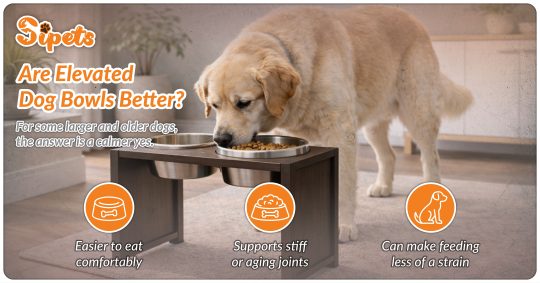
An elevated bowl brings the food closer to mouth height, reducing how far your dog needs to bend. For many seniors, that alone makes mealtimes noticeably easier.
Can Elevated Bowls Help With Arthritis?
They Don’t Cure It — But They Can Reduce Strain
It’s important to be realistic here. Raised bowls won’t “fix” arthritis. But they can reduce the stress placed on sore joints, particularly in the:
- neck
- shoulders
- elbows
- front legs
By allowing your dog to eat in a more natural standing position, elevated bowls can:
- ease stiffness during meals
- reduce hesitation before eating
- make getting up afterwards less of a struggle
Many owners notice their dog looks more relaxed while eating — and that matters.
Signs Your Senior Dog Might Benefit From a Raised Bowl
Not every older dog needs one, but it’s worth paying attention to how your dog behaves at mealtimes.
You might notice:
- hesitation before approaching the bowl
- awkward positioning while eating
- eating lying down or half-sitting
- stiffness after meals
- reluctance to get up once finished
These are often subtle signs of discomfort rather than fussiness.
Choosing the Right Height (This Matters)
Too High Can Be Just as Uncomfortable
An elevated bowl should raise the food to roughly chest level, not force your dog to stretch upwards.
A good guide:
- your dog should be able to eat with their neck fairly neutral
- no craning up, no crouching down
- weight evenly distributed on all four legs
Sipets raised bowls for senior dogs are designed with sensible, dog-friendly heights — not exaggerated stands that look nice but feel awkward in use.
Stability Is Just as Important as Height
Senior dogs often have less balance than they used to. A bowl that wobbles or slides can actually make things worse.
Look for:
- a sturdy base
- non-slip feet
- bowls that stay put while eating
When the bowl doesn’t move, your dog doesn’t have to adjust constantly — which helps them feel more secure.
Feeding Tips for Older Dogs
Slow Things Down (Gently)
Senior dogs often benefit from calmer mealtimes.
- avoid feeding when they’re overexcited
- keep feeding areas quiet
- give them time to eat without pressure
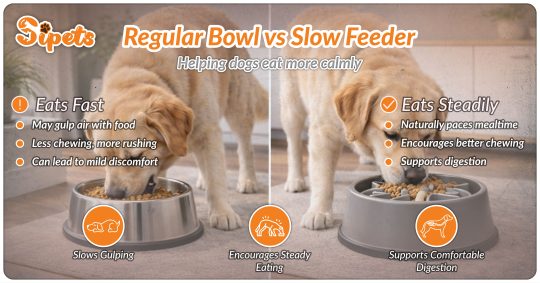
If your dog also eats quickly, pairing an elevated bowl with a gentle slow-feed design can help — just make sure it doesn’t require awkward reaching.
Smaller Portions, More Often
Some older dogs find large meals uncomfortable. Splitting food into two or three smaller meals can be easier on digestion and joints.
Raised bowls work particularly well with this approach, as your dog isn’t repeatedly bending down for large amounts of food.
Keep Water Accessible
Water bowls matter just as much as food bowls.
Older dogs can become dehydrated more easily, especially if arthritis makes movement uncomfortable.
An elevated water bowl placed somewhere familiar can encourage more regular drinking.
Are Raised Bowls Safe for All Senior Dogs?
Usually, Yes — With Common Sense
Most senior dogs tolerate elevated bowls very well. However:
- very small dogs may only need a slight lift
- dogs with certain medical conditions should be assessed individually
- sudden changes should be introduced calmly
If you’re unsure, observe your dog closely for the first few meals. Comfort should be obvious — not forced.
When Raised Bowls Might Not Be Needed
If your older dog:
- eats comfortably from the floor
- shows no stiffness
- has no balance issues
- seems relaxed before and after meals
…then there’s no urgent need to change anything. This is about responding to your dog’s needs, not ticking boxes.
Final Thoughts: Comfort Is the Priority Now
As dogs get older, comfort starts to matter more than convenience or routine.
Elevated dog bowls for senior dogs aren’t about making things fancy — they’re about making everyday moments kinder. If standing to eat feels easier, calmer and less stiff for your dog, that’s a meaningful improvement to their quality of life.
Sometimes the best care isn’t a big intervention.
It’s a small change that quietly makes every day a little more comfortable.
FAQs:
Do vets recommend raised bowls for older dogs?
Many do, especially for dogs with arthritis or mobility issues.
Can raised bowls help with digestion?
They can help some dogs eat more comfortably, which may support digestion.
Should food and water both be elevated?
Ideally, yes — especially if bending causes discomfort.
Are raised bowls suitable for large breeds?
Yes, provided the height is appropriate and the base is stable.
Will my dog need time to adjust?
Most dogs adapt quickly, often within the first few meals.