- Your cart is empty
- Continue Shopping

Elevated Dog Bowls for Large Dogs
-
By Yash
- Posted on
- 0 comments
- Uncategorized
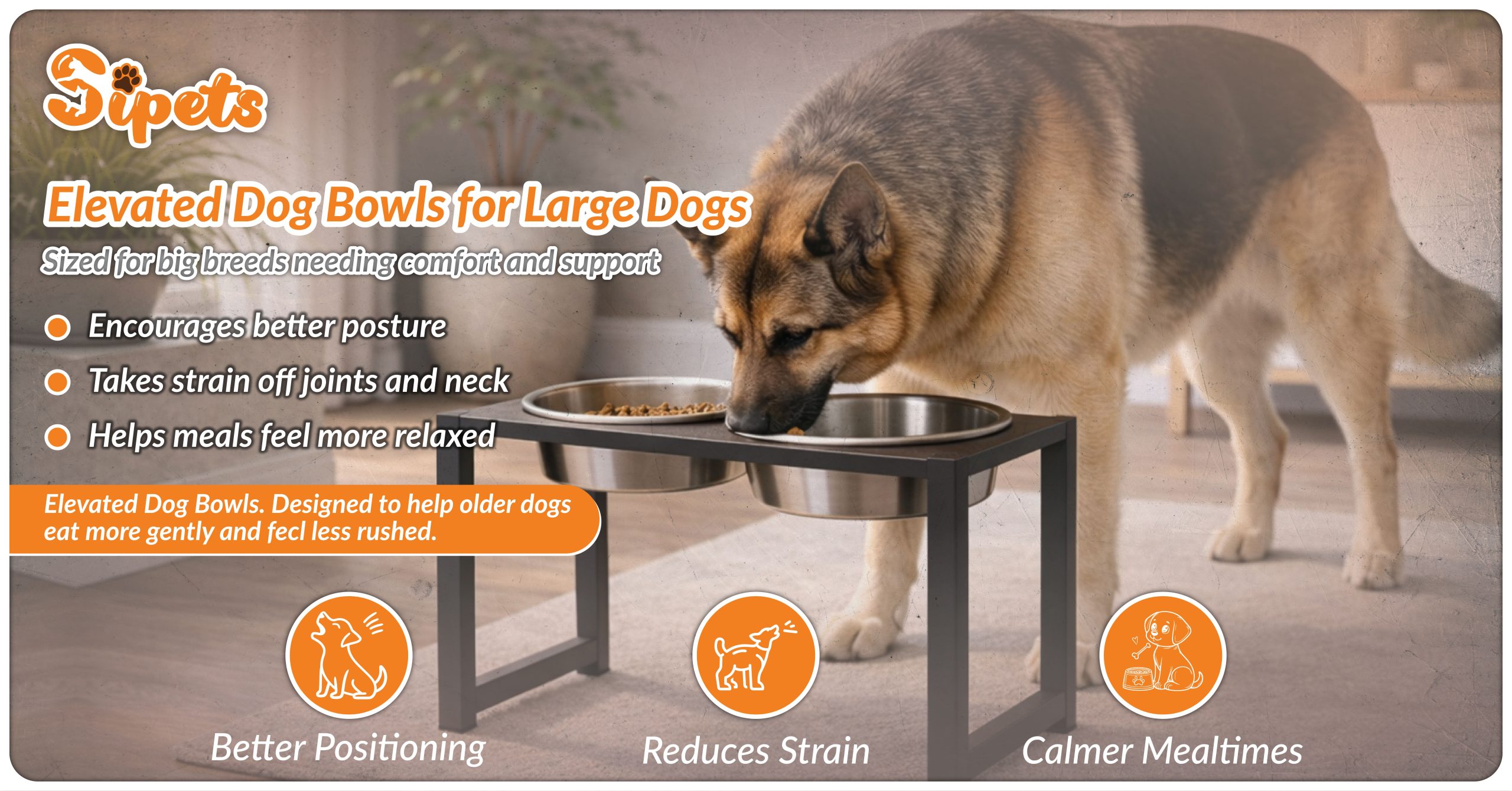
If you live with a large dog, you already know this: everything is bigger. The paws. The tail. The appetite. And often, the mess around the food bowl.
Watching a big dog eat from a bowl on the floor can feel slightly awkward. Long legs folded down, neck stretched low, shoulders hunched forward — it doesn’t always look comfortable. That’s usually when people start asking whether elevated dog bowls for large dogs are actually useful, or just another pet trend.
The honest answer? For many large breeds, they’re less about looks and more about comfort, posture, and practicality.
Do Large Dogs Need Elevated Bowls?
“Need” Might Be the Wrong Word — But Many Benefit From Them
Not every large dog needs an elevated bowl. Some are perfectly happy eating from the floor their whole lives.
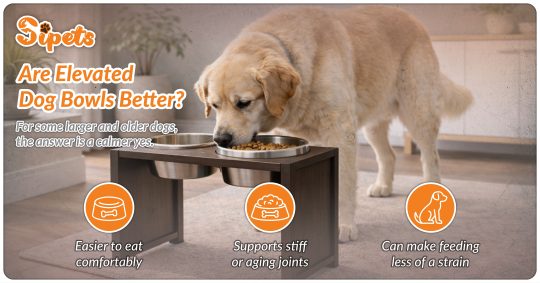
That said, large dogs place far more strain on their joints, neck and shoulders simply because of their size. Repeatedly bending down to eat — especially multiple times a day — can become uncomfortable over time.
Raised bowls can help by:
- reducing how far your dog has to lower their head
- encouraging a more natural eating posture
- taking pressure off the neck and front legs
For many big dogs, mealtimes simply look calmer and more relaxed with an elevated setup.
Large Breeds That Often Benefit Most
You’ll often see raised bowls working particularly well for breeds like:
- Labradors and Golden Retrievers
- German Shepherds
- Rottweilers
- Dobermans
- Boxers
- Great Danes
- Mastiffs
- Bernese Mountain Dogs
These breeds tend to have long legs and deep chests, which makes floor-level feeding more awkward than it looks.
Best Bowl Height for Large Dogs (Without Getting Technical)
It’s About Posture, Not Measurements
You don’t need a tape measure or exact inches to get this right.
A good general rule:
- your dog should be able to eat without crouching
- their neck should stay fairly neutral
- they shouldn’t have to stretch upwards either
When it’s right, your dog looks balanced and comfortable — not hunched, not reaching.
Sipets large dog bowl stands are designed with this in mind, offering sensible height options that suit big frames without forcing unnatural positions.
Can Elevated Bowls Help Digestion in Large Dogs?
Sometimes — Indirectly
There’s a lot of noise online about digestion and raised bowls. Let’s keep this grounded.
Elevated bowls don’t magically fix digestion. But they can help large dogs eat more calmly and steadily, which may reduce:
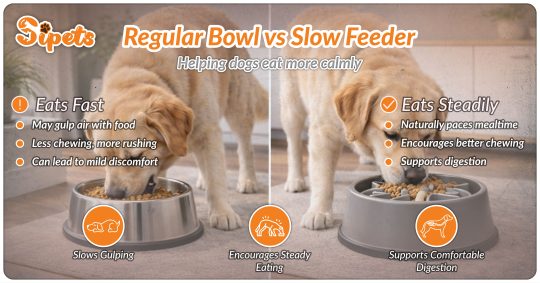
- gulping
- awkward swallowing
- rushing through meals
When a dog is more comfortable while eating, they’re less likely to bolt their food — and calmer eating often leads to fewer post-meal issues.
Stability Matters More Than People Realise
Large dogs are powerful without trying to be. A lightweight bowl doesn’t stand a chance.
An elevated bowl stand for a big dog needs:
- a solid, weighted base
- non-slip feet
- bowls that don’t rattle or tip
If the stand moves while your dog eats, it defeats the entire purpose. Stability equals confidence — and confident dogs eat more calmly.
Feeding Large Dogs Is About Reducing Strain Everywhere
Neck, Shoulders and Front Legs Take the Hit
Large dogs already put more stress on their joints simply by existing. Over time, small daily movements add up.
An elevated bowl:
- reduces repetitive bending
- supports better alignment during meals
- can make getting up after eating easier
It’s not dramatic. It’s subtle. But those small reductions in strain matter over years.
Raised Bowls vs Floor Bowls for Large Dogs
When Floor Bowls Are Usually Fine
- young, athletic dogs
- dogs that eat slowly and comfortably
- no signs of stiffness or hesitation
When Raised Bowls Often Help
- dogs that sprawl or sit while eating
- dogs that rush their food
- dogs showing early stiffness
- older large breeds
- dogs that knock bowls around constantly
It’s less about age and more about how your dog moves.
Introducing an Elevated Bowl (Without Drama)
Big dogs can be suspicious of change — especially noisy, clanging change.
Tips for a smooth transition:
- place the stand where your dog normally eats
- let them sniff it first
- don’t rush the first meal
- keep the area calm and familiar
Most large dogs adapt quickly once they realise eating feels easier.
Final Thoughts: Big Dogs Deserve Thoughtful Setup
Large dogs already ask more of their bodies every day. Feeding shouldn’t add unnecessary strain to that.
Elevated dog bowls for large dogs aren’t about trends or aesthetics. They’re about:
- comfort
- posture
- stability
- calmer mealtimes
If your big dog eats more comfortably, stands more naturally, and looks more relaxed at the bowl, that’s a meaningful improvement — even if it seems small.
And when something as simple as a well-designed bowl stand quietly improves everyday life, that’s usually a sign you’ve made the right choice.
FAQs:
Are raised bowls safe for large breeds?
Yes, when the height is appropriate and the stand is stable.
Do vets recommend elevated bowls for big dogs?
Often for comfort, posture, and joint support — especially as dogs age.
Can raised bowls reduce mess for big eaters?
Absolutely. They’re harder to knock over and keep feeding more controlled.
Should water bowls be elevated too?
Usually yes — especially for tall dogs with long necks.
Will my dog need time to adjust?
Most large dogs settle within a few meals.