- Your cart is empty
- Continue Shopping

Ceramic vs Stainless Steel Dog Bowls
-
By Yash
- Posted on
- 0 comments
- Uncategorized
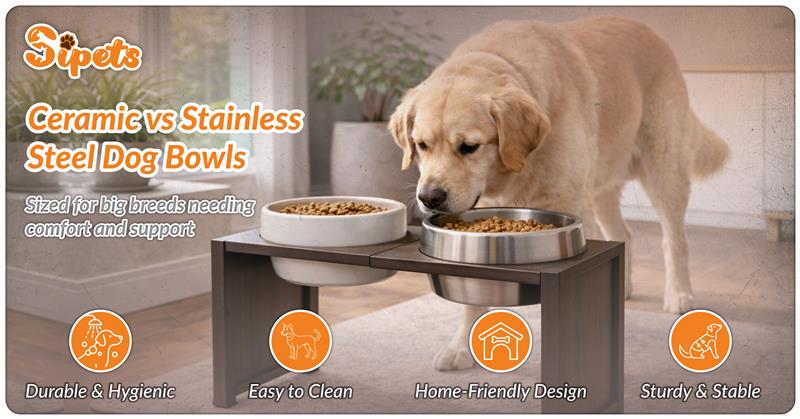
Standing in front of a shelf of dog bowls shouldn’t feel like a decision that needs a spreadsheet — but somehow it does. Ceramic looks nice. Stainless steel feels practical. One feels homely, the other feels indestructible. And somewhere in the middle, you’re wondering what’s actually best for your dog.
If you’ve been stuck choosing between ceramic vs stainless steel dog bowls, you’re not alone. Both are popular, both have real benefits, and both can be perfectly safe — if you know what you’re looking for.
Let’s walk through it properly, without hype or scare tactics, so you can choose what genuinely fits your dog and your day-to-day life.
Is Ceramic or Stainless Steel Better for Dogs?
The honest answer?
Neither is automatically “better” for every dog. It depends on how you feed your dog, where the bowl lives, and how much wear and tear it sees.
Some dogs do brilliantly with ceramic bowls for years. Others turn them into a cracked mess within weeks. Stainless steel, on the other hand, is almost impossible to destroy — but it’s not everyone’s favourite look.
Understanding the differences makes the decision much easier.
Stainless Steel Dog Bowls: The Practical Favourite
Why So Many Owners Choose Stainless Steel
Stainless steel bowls are popular for very simple reasons:
- They’re tough
- They’re easy to clean
- They don’t absorb smells or stains
- They cope well with daily use
For busy households, multi-dog homes, or messy eaters, stainless steel tends to just… work.
Hygiene and Cleaning
From a hygiene point of view, stainless steel is hard to beat. It’s non-porous, which means bacteria and residue have fewer places to hide. Most stainless steel bowls are dishwasher safe, making regular cleaning easy and consistent.
If you feed wet food, raw food, or anything that leaves residue behind, stainless steel makes life easier.
Any Downsides?
They’re not perfect.
- Some dogs dislike the noise if the bowl scrapes on the floor
- Lightweight bowls can slide without a non-slip base
- They’re functional, not decorative
That said, most of these issues are easily solved with a rubber base or feeding mat.
Ceramic Dog Bowls: The Home-Friendly Option
Why People Love Ceramic Bowls
Ceramic bowls often win on looks. They blend into kitchens nicely, come in lots of designs, and feel more like a “proper” dish than pet equipment.
They’re also heavier, which means:
- Less sliding
- Less tipping
- Calmer mealtimes for some dogs
For dogs who nudge or push their bowls, that weight can be a real advantage.
Are Ceramic Bowls Safe for Dogs?
Yes — good-quality ceramic bowls are safe, but there are a few things you need to check.
Do Ceramic Bowls Contain Lead?
This is where people get understandably cautious.
Modern, pet-specific ceramic bowls sold by reputable brands are made to meet safety standards and should not contain unsafe levels of lead. The concern usually comes from:
- Very old ceramic bowls
- Decorative bowls not designed for food
- Cheap imports with unknown glazing standards
As long as the bowl is clearly marked as food-safe and intended for pets, lead risk is extremely low.
Safety Tips for Using Ceramic Bowls
Ceramic bowls are safe — but only if they stay in good condition.
Check for Chips and Cracks
Even small cracks can trap bacteria and moisture. Once a ceramic bowl chips, it’s best to replace it.
Avoid Sudden Temperature Changes
Pouring boiling water into a cold ceramic bowl can cause cracking over time. Warm water is fine.
Inspect Regularly
A quick glance when washing is enough. If it looks worn, it probably is.
Ceramic vs Stainless Steel Dog Bowls: Side-by-Side Comparison
|
Feature |
Ceramic Bowls |
Stainless Steel Bowls |
|
Durability |
Can chip or crack |
Extremely durable |
|
Weight |
Heavier, stays put |
Lightweight unless weighted |
|
Hygiene |
Non-porous when intact |
Non-porous and scratch-resistant |
|
Cleaning |
Often dishwasher safe |
Almost always dishwasher safe |
|
Appearance |
Stylish, home-friendly |
Simple, practical |
|
Best For |
Calm eaters, indoor feeding |
Messy eaters, wet/raw food
|
Which One Suits Your Dog’s Routine?
Go for Stainless Steel If:
- You feed wet or raw food regularly
- Your dog is messy or enthusiastic at mealtimes
- You want the easiest cleaning option
- Durability matters more than looks
Go for Ceramic If:
- Your dog eats calmly
- You want a bowl that blends into your home
- Sliding bowls drive you mad
- You’re happy to replace it if it chips
Many owners actually use both — stainless steel for daily meals, ceramic for water or calmer feeding areas.
What About Non-Slip and Stability?
Material matters, but stability matters just as much.
A sliding bowl can:
- Make dogs rush their food
- Increase spillage
- Create unnecessary stress at mealtimes
Both ceramic and stainless steel bowls work best when paired with:
- A non-slip base
- Or a simple feeding mat
That combination keeps things calm, clean, and predictable.
Final Thoughts: There’s No “Wrong” Choice
The ceramic vs stainless steel dog bowls debate doesn’t need a winner. Both materials are safe, widely used, and perfectly suitable when chosen thoughtfully.
What matters most is:
- How easy the bowl is to keep clean
- How comfortable your dog feels using it
- How well it fits into your routine
If the bowl stays clean, doesn’t slide everywhere, and your dog eats happily from it, you’ve chosen well — regardless of material.
FAQs:
Are ceramic bowls safe for dogs long-term?
Yes, as long as they’re food-safe and free from cracks or chips.
Do stainless steel bowls cause allergies?
Very rarely. They’re often recommended for dogs with sensitivities.
Should I replace scratched bowls?
Yes. Deep scratches can trap bacteria, especially in plastic or damaged ceramic.
Are ceramic bowls dishwasher safe?
Most are, but always check the manufacturer’s guidance.
Which is better for puppies?
Stainless steel tends to be safer, as puppies are more likely to chew or knock bowls around.