- Your cart is empty
- Continue Shopping

Where Should Dog Bowls Be Placed?
-
By Yash
- Posted on
- 0 comments
- Uncategorized
Most of us put the dog bowl down wherever there’s space and call it a day. Near the kitchen door. By the fridge. Tucked into a corner so it’s not under your feet.
But if you’ve ever dealt with spilled water, scattered food, a dog that refuses to eat, or one that guards their bowl like it’s treasure — placement might be part of the problem.
Where dog bowls go isn’t about interior design or strict rules. It’s about comfort, routine, and making everyday feeding feel calm and predictable for your dog (and less annoying for you).
Let’s talk about what actually works in real homes.
Why Dog Bowl Placement Matters More Than You Think
Feeding is one of the most repeated moments in your dog’s day. Same bowl. Same spot. Same routine.
When that setup feels right, something lovely happens — dogs settle. They know exactly where to go, what to expect, and how that moment unfolds. There’s no hesitation, no uncertainty. Just a calm rhythm that becomes part of daily life.
A well-chosen feeding spot helps:
- steady, relaxed eating
- fewer spills and less mess
- better focus during meals
- a sense of security around routine
Good placement gently reinforces good habits. It turns mealtimes into something predictable and reassuring — a small, everyday anchor in your dog’s world.
Where Should Dog Bowls Go Indoors?
Choose a Calm, Low-Traffic Area
Dogs eat best when they don’t feel watched, stepped over, or startled.
The ideal indoor feeding spot is:
- away from doorways and walkways
- not directly next to loud appliances
- somewhere your dog can focus
Kitchens are common — and that’s fine — but not right in the middle of the action. A corner or side wall usually works better than the centre of the room.
Avoid Constant Disruption
If people are constantly walking past, reaching over the bowl, or stepping around it, some dogs will:
- eat too fast
- walk away mid-meal
- become tense or protective
Giving your dog a bit of space goes a long way.
Feeding Area Best Practices (That Actually Work)
Consistency Is More Important Than Perfection
Once you choose a spot, stick to it.
Dogs rely heavily on routine. Moving bowls around daily can confuse them, especially puppies, senior dogs, or nervous eaters.
Same place. Same time. Same setup.
Keep Food and Water Close — But Not Crowded
Food and water bowls can sit near each other, but they shouldn’t feel cramped. Some dogs prefer a little distance between the two.
Watch how your dog behaves:
- If they ignore water during meals, try moving it slightly away
- If they knock bowls together, space them out
There’s no universal rule — just adjust based on what you see.
Indoor vs Outdoor Dog Bowl Placement
Indoor Feeding: Best for Most Dogs
For the majority of households, indoor feeding is the safest and most consistent option.
Indoor placement means:
- better hygiene
- easier monitoring of appetite
- less risk of contamination from wildlife
- protection from weather
It also helps you notice changes early — like a dog eating slower than usual or skipping meals.
Outdoor Feeding: When It Makes Sense (and When It Doesn’t)
Outdoor bowls can work in specific situations, but they need more care.
If feeding outside:
- keep bowls shaded
- bring them in after meals
- clean them more frequently
- avoid leaving food out
Leaving bowls outdoors permanently invites insects, dirt, and other animals — and can quickly undo good hygiene habits.
Why Flooring Matters More Than You Expect
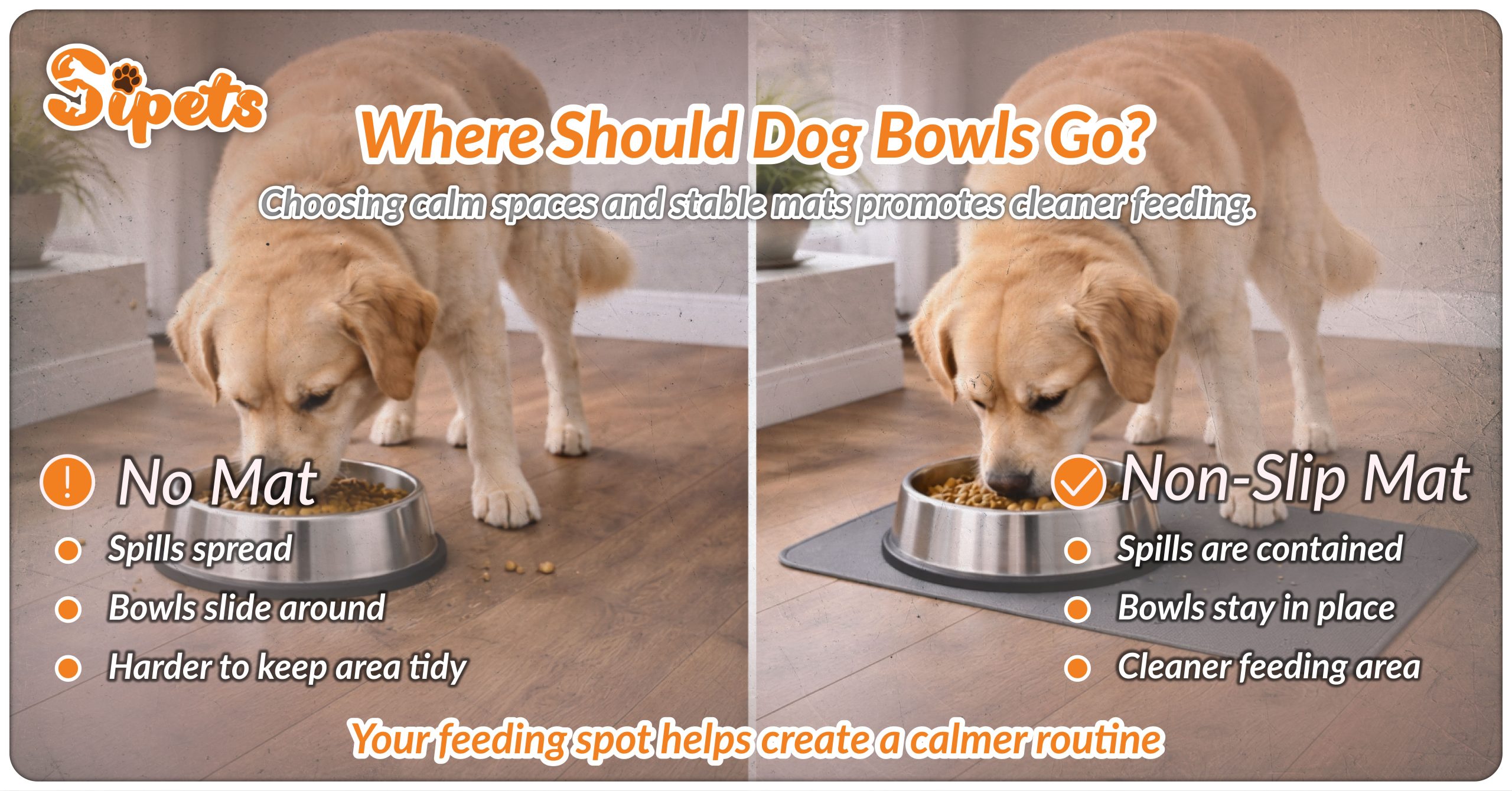
Hard floors + water bowls = chaos.
Tiles, laminate, and wood floors make it easy for bowls to slide, spill, and spread mess far beyond the feeding area.
This is where non-slip support becomes essential.
A stable base:
- keeps bowls in place
- reduces noise
- prevents water spreading
- makes feeding feel calmer
Many owners notice an immediate difference just by stabilising the setup.
If you want a deeper look at how mats help with hygiene, mess, and routine, this guide on Dog Bowl Mats Benefits explains it in practical detail.
Using Non-Slip Mats to Improve Bowl Placement
Why Mats Help So Much
A good non-slip mat does more than protect the floor.
It:
- anchors bowls in one spot
- defines a clear “feeding zone”
- catches spills before they spread
- makes cleaning quicker
For dogs, that clear boundary helps them understand where eating happens — which supports routine and calm behaviour.
Where Mats Work Best
Place the mat:
- flush against a wall or cabinet (for extra stability)
- in a consistent location
- away from doors and high traffic
This small change often solves multiple issues at once.
Placement Tips for Different Types of Dogs
Puppies
Puppies are easily distracted and messy.
Best practice:
- quiet area
- consistent placement
- non-slip mat from day one
This helps them build good habits early instead of unlearning bad ones later.
Senior Dogs
Older dogs may struggle with:
- slippery floors
- bending for long periods
- noisy environments
Choose a spot with:
- good grip underfoot
- minimal movement around them
- easy access
Comfort matters more than convenience here.
Multi-Dog Households
If you have more than one dog, placement becomes even more important.
Consider:
- separate feeding spots
- enough distance to avoid tension
- visual separation if needed
This prevents food guarding and rushed eating.
Should Water Bowls Be in the Same Place?
Not necessarily.
Some owners prefer:
- food bowls in one area
- water bowls in multiple locations
This works particularly well in warmer months or larger homes. Just make sure each bowl is:
- stable
- easy to clean
- placed somewhere calm
Again, mats help keep water where it belongs.
Common Bowl Placement Mistakes
These are incredibly common — and easy to fix.
Right by the Door
Too much foot traffic. Too many distractions.
Next to Loud Appliances
Washing machines, dishwashers, and boilers can put dogs off eating.
Constantly Moving the Bowls
What feels minor to us can disrupt a dog’s routine.
No Protection Underneath
Bare floors + bowls = mess, slipping, frustration.
A Simple Placement Checklist
If you’re unsure whether your setup works, ask yourself:
- Can my dog eat without being disturbed?
- Do bowls stay in place?
- Is cleaning quick and easy?
- Does the area stay relatively dry and tidy?
If the answer is yes, you’re doing it right.
Final Thoughts: The Right Spot Makes Everyday Care Easier
Where dog bowls are placed isn’t about rules or aesthetics. It’s about creating a small, predictable moment of calm in your dog’s day.
A quiet location, consistent placement, and a stable base can:
- reduce mess
- support better eating habits
- improve hygiene
- lower stress for everyone
Sometimes the biggest improvements come from the smallest changes — and bowl placement is one of those things that quietly makes life easier when it’s done right.
FAQs:-
Where should dog bowls go in a small flat?
A quiet corner of the kitchen or dining area usually works best.
Should dog bowls be near the kitchen?
Yes, as long as it’s not a busy walkway or next to loud appliances.
Is it okay to feed dogs outdoors?
Occasionally, yes — but bowls shouldn’t be left outside permanently.
Do non-slip mats really help?
Yes. They reduce movement, spills, and make cleaning much easier.
Should puppies and adult dogs eat in the same place?
Yes, consistency helps — just ensure the area suits both dogs’ needs.