- Your cart is empty
- Continue Shopping

How Often to Wash Dog Bowls
-
By Yash
- Posted on
- 0 comments
- Uncategorized
If you’ve ever picked up your dog’s bowl and thought, “I washed this… didn’t I?”, you’re not alone.
Dog bowls are one of those everyday items that quietly blend into the background. They’re always there. They get used twice a day (sometimes more). And because feeding feels so routine, cleaning can feel like something you’ll “do later”.
The reality is far simpler than people make it sound. Bowl washing isn’t about being overly cautious or obsessive. It’s about building a small, consistent habit that keeps feeding fresh, pleasant and comfortable for your dog.
Once you understand what’s sensible — and why — it becomes second nature.
Why Bowl Cleaning Matters (Without Turning It Into a Big Deal)
Feeding is one of the most repeated parts of your dog’s day.
Same bowl. Same space. Same routine.
When bowls are clean:
- food smells fresher
- water tastes fresher
- feeding areas feel calmer
- mealtimes stay inviting
It’s not about dramatic consequences. It’s about everyday comfort. Just like you wouldn’t repeatedly eat from an unwashed plate, your dog benefits from the same basic standard.
Small habits, repeated consistently, make all the difference.
How Often Should Dog Bowls Be Washed?
Let’s keep this clear and practical.
Food Bowls: A Simple Rule
For most dogs, food bowls should be washed once a day.
If your dog eats twice daily, a quick rinse after the first meal and a proper wash at the end of the day works well.
If you’re feeding once daily, wash after that meal.
It doesn’t need to be complicated. Daily cleaning keeps residue from building up and keeps bowls fresh without making it a constant chore.
Should Dog Bowls Be Washed After Every Meal?
The honest answer? It depends on what your dog eats.
Dry Food (Kibble)
Dry food leaves behind:
- fine crumbs
- natural oils
- a light residue
You don’t necessarily need a full scrub after every single meal, but you should rinse between feeds and wash properly once a day.
Dry food bowls can look clean even when a light film is building up — so consistency helps.
Wet or Raw Food
Wet food and raw diets contain more moisture and fat. Because of that, bowls benefit from being washed after each meal.
This isn’t about alarm. It’s simply good kitchen-style hygiene.
If you’ve ever noticed a stronger smell from a bowl that held wet food, you’ve seen why washing sooner rather than later helps.
A warm, soapy wash after feeding keeps things fresh and stops oils lingering.
Water Bowl Cleaning Frequency
Water bowls are often overlooked because “it’s only water”.
But think about it:
Your dog drinks from it multiple times a day.
Their mouth goes in and out.
Tiny bits of food can drop in.
Dust from the room settles on the surface.
Over time, you may notice:
- a cloudy look
- a slightly slimy feel around the edges
- sediment at the bottom
That’s your sign it’s time for a proper wash.
A Realistic Water Bowl Routine
- Refresh water daily
- Wash the bowl every day or every other day
- In warm weather, wash daily
It’s quick, easy, and keeps hydration appealing.
Wet Food vs Dry Food: Why the Difference Matters
The reason frequency changes comes down to moisture and oils.
Dry Food
- Lower moisture
- Slower residue build-up
- Easier to rinse
Still needs daily washing — but not necessarily after every single feed.
Wet or Raw Food
- Higher moisture
- More oils
- Stronger smells if left
Benefits from washing after each meal.
Neither approach is “right” or “wrong”. It’s simply about matching cleaning to what’s in the bowl.
What Happens If Dog Bowls Aren’t Washed Regularly?
Nothing dramatic overnight.
But over time, residue builds up.
You might notice:
- a faint smell
- a greasy texture
- water that doesn’t look as clear
- fussier eating behaviour
It’s similar to repeatedly using a mug without washing it properly. Not an emergency — just not ideal.
If you’re curious about what builds up in bowls over time and why regular cleaning helps, our guide on Dog Bowl Hygiene Risks explains it clearly and calmly.
The goal isn’t fear. It’s understanding.
Dishwasher or Sink — What’s Best?
This is where many owners pause.
Can I put dog bowls in the dishwasher?
Is it safe to wash them in the kitchen sink?
The short answer: both are fine — if done properly.
Washing in the Sink
Hot water and washing-up liquid work perfectly well.
Make sure to:
- scrub properly
- rinse thoroughly
- let bowls dry fully
Avoid just rinsing and putting them back down damp.
If you’re handling raw meat for your own cooking at the same time, simply wash bowls separately — just as you would chopping boards.
Using the Dishwasher
For stainless steel and high-quality silicone bowls, the dishwasher can be one of the most thorough ways to clean.
Dishwashers:
- use higher temperatures
- run longer cycles
- break down grease effectively
If you’re unsure which materials are safe in the dishwasher, our detailed guide on Dishwasher Safety for Dog Bowls walks through it properly.
Again, it’s not about strict rules — just sensible cleaning.
Materials Make a Difference
Some bowls are easier to maintain than others.
Stainless Steel
- Non-porous
- Dishwasher safe
- Resistant to staining
- Very easy to clean
Ceramic
- Smooth surface
- Easy to wash
- Must be replaced if chipped
Plastic
- Can scratch over time
- May hold odours
- Needs replacing sooner
If a bowl starts smelling even after washing, or shows visible wear, it’s probably time to replace it.
Cleaning is important — but so is condition.
Don’t Forget the Feeding Area
Bowls are only part of the setup.
Food drops. Water splashes. Paws wander through.
Wiping down the surrounding floor or feeding mat regularly helps keep everything feeling fresh.
It doesn’t need to be a deep clean. A quick wipe when you’re already in the kitchen does the job.
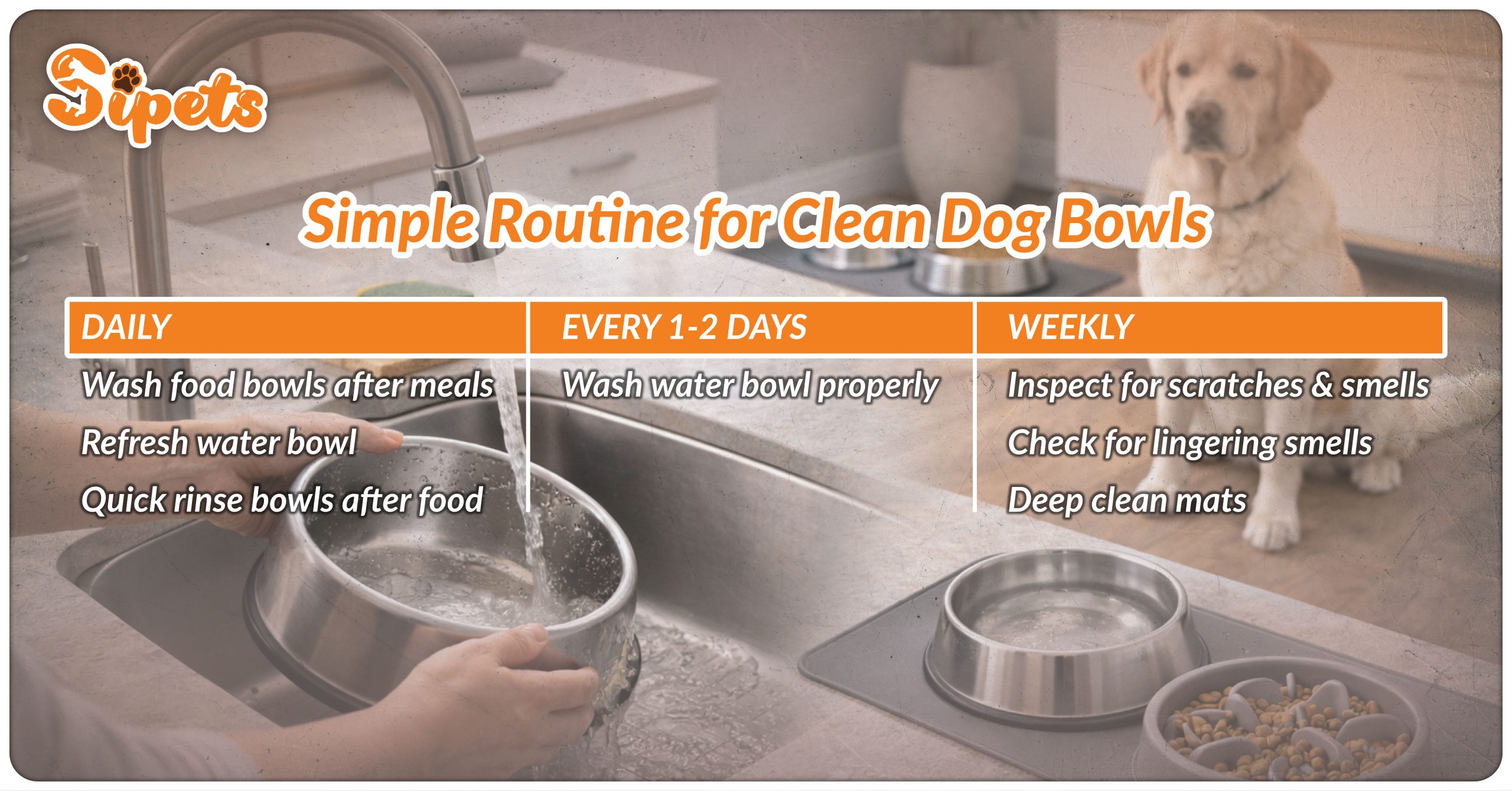
A Practical Routine That Works in Real Life
No complicated system required.
Daily
- Rinse bowls after meals
- Wash food bowls once daily
- Refresh water
Every 1–2 Days
- Wash water bowl properly
- Wipe feeding area
Weekly
- Inspect bowls for scratches
- Check for lingering smells
- Deep clean mats
This takes minutes — not hours.
Make It Automatic
The easiest way to stay consistent is to attach bowl washing to something you already do.
For example:
- Wash bowls while loading the dishwasher
- Clean water bowls while making tea
- Wipe mats when wiping kitchen counters
When it becomes part of your flow, you stop thinking about it altogether.
Final Thoughts
Knowing how often to wash dog bowls doesn’t need to feel complicated.
Daily washing for food bowls.
Regular cleaning for water bowls.
A bit more attention for wet food.
That’s all.
It’s not about being perfect. It’s about creating a simple, repeatable habit that keeps feeding fresh and comfortable for your dog.
When small routines feel manageable, they stick. And when they stick, everything feels easier — for both of you.
FAQs
How often should dog bowls be washed?
Food bowls should be washed daily. Water bowls every day or every other day.
Should I wash bowls after every wet food meal?
Yes — wet food bowls benefit from washing after each feed.
Is rinsing enough for dry food bowls?
Rinsing helps between meals, but a proper daily wash is best.
Can I put stainless steel bowls in the dishwasher?
Most stainless steel bowls are dishwasher safe — check the product details first.
How do I know when a bowl needs replacing?
If it smells, looks scratched, or won’t clean properly, it’s time.