- Your cart is empty
- Continue Shopping

Elevated Dog Bowls Guide
-
By Yash
- Posted on
- 0 comments
- Uncategorized
If you’ve ever watched your dog eat and thought, “That looks a bit uncomfortable,” you’re not imagining things.
Some dogs crouch low. Some stretch their necks awkwardly. Larger breeds often fold themselves in ways that don’t look especially dignified. And older dogs? You can sometimes see them hesitate before lowering their head all the way to the floor.
That’s usually when elevated dog bowls come into the conversation.
But are raised bowls actually better?
Do vets recommend them?
Or is it one of those pet trends that sounds helpful but doesn’t make much difference?
Let’s talk it through properly — calmly, clearly, and without overcomplicating it.
What Are Elevated Dog Bowls?
An elevated dog bowl simply sits on a stand that raises it off the floor. Instead of bending all the way down, your dog eats from a bowl positioned closer to chest height.
The goal isn’t to change how much they eat.
It’s to support how they eat.
And for some dogs, that small shift in height can make feeding feel noticeably more comfortable.
Are Elevated Dog Bowls Good or Bad?
The honest answer? They’re good for the right dog.
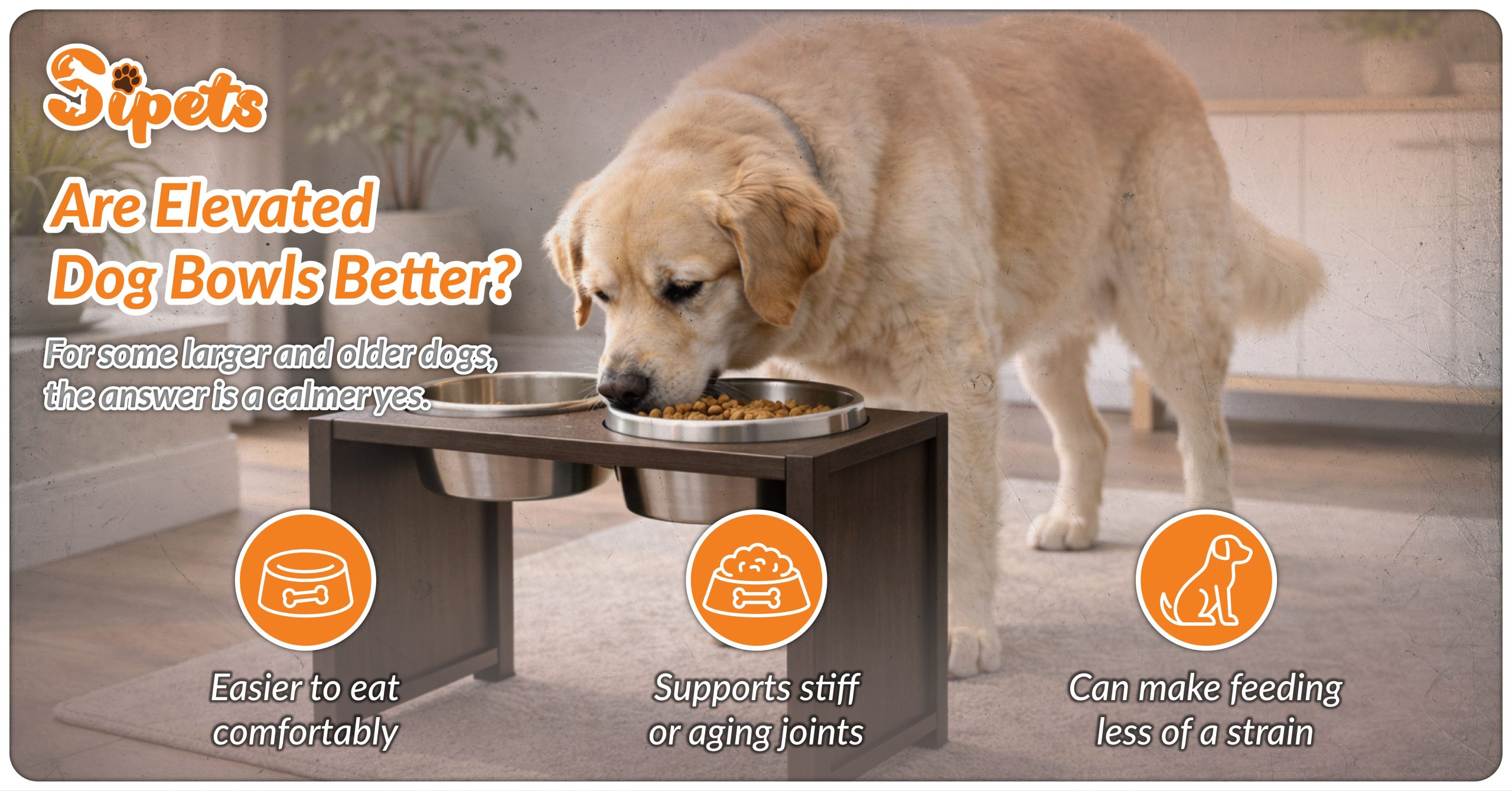
They’re not essential for everyone, and they’re not a magic fix for every issue. But when used appropriately, elevated bowls can:
- Encourage a more natural eating posture
- Reduce the need to crouch or strain
- Support dogs with joint stiffness
- Make feeding calmer for larger breeds
Like most things in pet care, it’s about suitability rather than trend.
Do Vets Recommend Elevated Dog Bowls?
Many vets suggest elevated bowls in specific situations, particularly for:
- Senior dogs
- Dogs with arthritis
- Very large breeds
- Dogs recovering from surgery
- Dogs with mobility challenges
They’re not routinely recommended for every puppy or small breed. Instead, they’re seen as a helpful option when posture or comfort is part of the picture.
It’s always sensible to ask your vet if your dog has a medical condition — but for healthy adult dogs, raised bowls are generally safe when chosen correctly.
Should Dog Bowls Be Elevated or on the Floor?
For most small to medium, healthy adult dogs, floor-level bowls work perfectly well.
But for larger or ageing dogs, lifting the bowl slightly can reduce the amount of bending required at the neck, shoulders and elbows.
The key isn’t height for the sake of height.
It’s proportion.
An elevated bowl should sit roughly at a comfortable level where your dog doesn’t have to:
- Stretch down dramatically
- Hunch forward
- Widen their stance to reach food
When the height feels natural, feeding becomes smoother.
The Benefits of Elevated Dog Bowls
Improved Posture
Large breeds like Labradors, German Shepherds and Great Danes often have to lower their front end quite significantly to reach a floor bowl. A raised stand reduces that bend and can make meals feel easier.
Joint Support for Older Dogs
If your dog is slowing down slightly or showing mild stiffness, small adjustments can make daily routines more comfortable. Raised bowls remove some of the repeated bending involved in twice-daily meals.
For a deeper look at this, our guide on Elevated Dog Bowls for Senior Dogs explains how height can support ageing joints in more detail.
Cleaner Feeding Areas
Elevated stands often feel more stable. Bowls are less likely to slide or tip, which can mean:
- Less mess
- Fewer spills
- A tidier feeding corner
More Comfortable for Tall Dogs
Breeds with long legs and deep chests often look visibly more at ease when the bowl sits closer to their natural stance.
You can explore breed-specific considerations in our detailed guide to Elevated Dog Bowls for Large Dogs, where we break down what works best for taller breeds.
Are There Any Risks?
When chosen correctly, elevated bowls are generally safe.
However, there are a few things to keep in mind:
- The height should be appropriate, not excessive
- The stand should feel stable and not wobble
- The bowls should fit securely in the stand
- Feeding posture should look relaxed, not stretched
If a bowl is too high, your dog may end up lifting their neck awkwardly instead of lowering it slightly. Comfort should always guide the choice.
Who Should Use Elevated Bowls?
Elevated bowls are especially helpful for:
- Senior dogs
- Dogs with mild arthritis
- Large and giant breeds
- Dogs with neck or back sensitivity
- Dogs who struggle to bend fully
If your dog looks more comfortable standing upright than crouching, a raised bowl may suit them well.
Who May Not Need Them?
Not every dog requires elevation.
Floor-level bowls are often perfectly suitable for:
- Small breeds
- Young, healthy adult dogs
- Puppies (who grow quickly)
- Dogs who already eat comfortably
If your dog eats calmly, maintains good posture and seems relaxed, there’s no pressure to change anything.
How to Choose the Right Height
You don’t need exact measurements — just common sense.
A good starting point:
- The top of the bowl should sit somewhere around your dog’s lower chest
- Your dog should be able to eat without dramatically lowering or lifting their neck
- Their stance should look natural and balanced
Watching your dog for the first few meals will tell you more than any guide ever could.
Feeding Tips When Using Elevated Bowls
- Keep feeding areas quiet and consistent
- Ensure the stand doesn’t slide
- Clean bowls daily, as you normally would
- Check the stand regularly for stability
Elevated bowls don’t replace good hygiene or routine — they simply support posture.
Do Elevated Bowls Help Digestion?
There’s no magic digestive switch involved.
What elevated bowls may do is allow your dog to eat in a more relaxed, upright posture. When feeding feels comfortable, dogs often eat at a steadier pace.
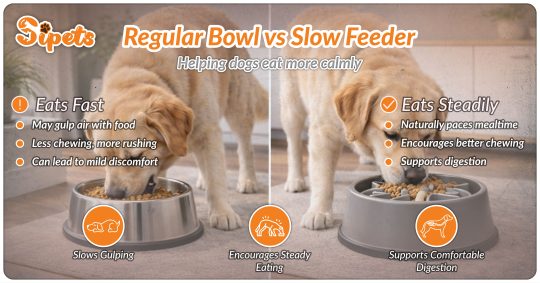
For fast eaters, you may want to pair elevation with other solutions, depending on the situation.
The focus is comfort — not a cure.
Choosing a Reliable Elevated Stand
If you decide to try one, look for:
- Strong, stable construction
- Non-slip feet
- Secure bowl fittings
- Easy-to-clean materials
- Appropriate height options
Sipets elevated bowl stands are designed with stability and everyday use in mind, making them suitable for both large and ageing dogs without feeling bulky or complicated.
Final Thoughts
Elevated dog bowls aren’t about trends. They’re about comfort.
For the right dog — especially large or senior breeds — lifting the bowl slightly can make everyday feeding feel smoother and more natural.
For others, a floor bowl remains perfectly suitable.
The key is simple: watch your dog. If they look relaxed, balanced and comfortable while eating, you’ve made the right choice.
And when comfort improves, everything else tends to follow.
FAQs
Are elevated dog bowls safe?
Yes, when the height suits your dog and the stand is stable.
Do raised bowls help older dogs?
They can make bending easier, which many senior dogs appreciate.
Can puppies use elevated bowls?
It’s usually best to wait until they’re fully grown, as their height changes quickly.
How do I know if the height is right?
Your dog should eat comfortably without stretching or crouching awkwardly.
Do vets recommend raised bowls?
Vets often suggest them for large breeds and senior dogs, especially where joint comfort is involved.