- Your cart is empty
- Continue Shopping
Best Bowls for Fast Eaters
-
By Yash
- Posted on
- 0 comments
- Uncategorized
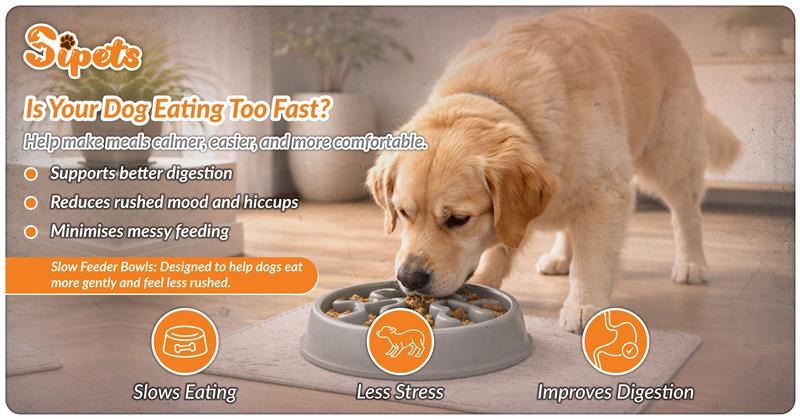
If your dog finishes their dinner before you’ve even straightened up, you’re not imagining it.
One second you’re pouring the food, the next the bowl is spotless and your dog is licking the floor like it owes them money. It’s funny the first few times. Then come the hiccups, the pacing, the gurgling noises, or the occasional sick-up five minutes later.
Fast eating is incredibly common — and it’s not your dog being greedy or badly behaved. But it is something worth addressing, because how your dog eats matters just as much as what they eat.
My Dog Eats Too Fast — What Bowl Should I Use?
Start With a Slow Feeder Bowl
For most fast eaters, the best place to start is a slow feeder dog bowl.
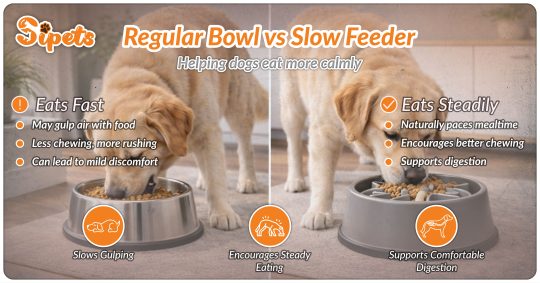
A slow feeder uses raised patterns or channels inside the bowl to gently interrupt how food is eaten. Your dog still gets the same meal — they just have to work around the shape instead of inhaling everything in one go.
The key word here is gently. A good slow feeder doesn’t frustrate your dog or turn meals into a chore. It simply slows things down enough to make eating more comfortable.
This is exactly what Sipets slow feeder dog bowls are designed for — everyday use, not gimmicks.
Can Fast Eating Cause Health Issues?
Short Answer: It Can, Over Time
Fast eating doesn’t automatically mean something terrible will happen, but it can contribute to a few common issues many owners recognise.
Common Problems Linked to Fast Eating
- Swallowing too much air (leading to wind and bloating)
- Hiccups straight after meals
- Regurgitating food
- Restlessness or discomfort after eating
- Messy feeding areas
For larger breeds especially, consistently gulping food isn’t ideal. Slowing meals down helps digestion keep pace with what’s going in.
This isn’t about fear — it’s about comfort.
Why Dogs Eat So Fast in the First Place
It’s Instinct, Not Bad Manners
Some dogs eat quickly because:
- They competed for food in the past
- They’re highly food motivated
- They get overexcited at mealtimes
- They’ve never learned to pace themselves
Rescue dogs, puppies, and multi-dog households often see this more.
Your dog isn’t doing it to you. They’re doing it because, to them, it makes sense.
Slow Feeder vs Puzzle Feeder: What’s the Difference?
This is where people often get stuck.
Slow Feeder Bowls
- Designed for daily meals
- Simple patterns that slow eating
- Low frustration
- Easy to clean
- Suitable for most dogs
Puzzle Feeders
- Designed for mental enrichment
- Require problem-solving
- Can be frustrating for some dogs
- Often messy or time-consuming
- Better as occasional activities
For everyday feeding, a slow feeder bowl is the practical choice. Puzzle feeders are great as extras, but they’re not ideal for every meal.
What Makes a Good Slow Feeder Bowl?
Not all slow feeders are created equal.
Things to Look For
- Stable base so the bowl doesn’t slide
- Smooth, rounded ridges (not sharp or awkward)
- Easy to clean (this matters more than people realise)
- Right depth and size for your dog’s muzzle
Sipets slow feeder dog bowls are designed with these real-life details in mind — they’re made to be used twice a day, every day, without turning feeding into a battle.
Will My Dog Get Frustrated With a Slow Feeder?
Usually, No — If It’s the Right One
Most dogs adjust surprisingly quickly. The first meal might involve a bit of staring, sniffing, or looking at you like you’ve personally offended them.
That passes.
If your dog:
- Can still access the food easily
- Isn’t pawing aggressively
- Doesn’t give up and walk away
…then the bowl is doing its job.
If frustration happens, the feeder may be too complex. A simpler slow feeder is almost always better than an overly clever one.
Tips to Help Your Dog Adjust
- Stay nearby for the first few meals
- Keep mealtimes calm
- Don’t rush or hover
- Avoid switching back and forth between bowls
Consistency helps your dog learn that food isn’t disappearing — it’s just arriving more slowly.
Can Slow Feeders Reduce Mess?
Yes — and this is a bonus most people don’t expect.
When dogs eat more slowly:
- Food stays in the bowl
- Bowls get pushed around less
- Water splashing often reduces too
A calmer eater usually means a cleaner floor.
Final Thoughts: Slowing Down Is an Act of Care
Fast eating is common, but it doesn’t have to be something you just put up with.
The right bowl can:
- Improve digestion
- Reduce discomfort
- Make mealtimes calmer
- Lower stress for both of you
A good slow feeder dog bowl isn’t about control — it’s about helping your dog eat in a way that actually suits their body.
If your dog eats like they’re racing the clock, slowing things down gently is one of the simplest, kindest changes you can make.
FAQs
Is a slow feeder suitable for puppies?
Yes, as long as the design is simple and the size suits your puppy.
Can slow feeders be used for wet food?
Most can. Just make sure the bowl is easy to clean properly.
How long should a meal take with a slow feeder?
There’s no perfect time, but noticeably longer than before is a good sign.
Do slow feeders work for all breeds?
They work for most. The key is choosing the right size and depth.
Should I use a slow feeder for every meal?
If your dog eats too fast consistently, yes — daily use is fine.