- Your cart is empty
- Continue Shopping

Dog Bowl Mats Benefits
-
By Yash
- Posted on
- 0 comments
- Uncategorized
If you’ve ever wiped up splashed water for the third time in a day, or found kibble scattered halfway across the kitchen, you already know the problem. Feeding time is meant to be routine — but without the right setup, it quickly turns messy, unhygienic and annoying.
That’s exactly where dog bowl mats come in. Not as a “nice-to-have” extra, but as one of those quiet essentials that make daily life with a dog smoother.
In this guide, we’ll break down why dog bowl mats actually matter, whether silicone mats are worth it, and how they help with cleanliness, hygiene and everyday sanity — especially in real UK homes.
Why use a dog bowl mat at all?
At first glance, a dog bowl mat can feel optional. But once you use one properly, you realise it’s solving a handful of everyday issues at once.
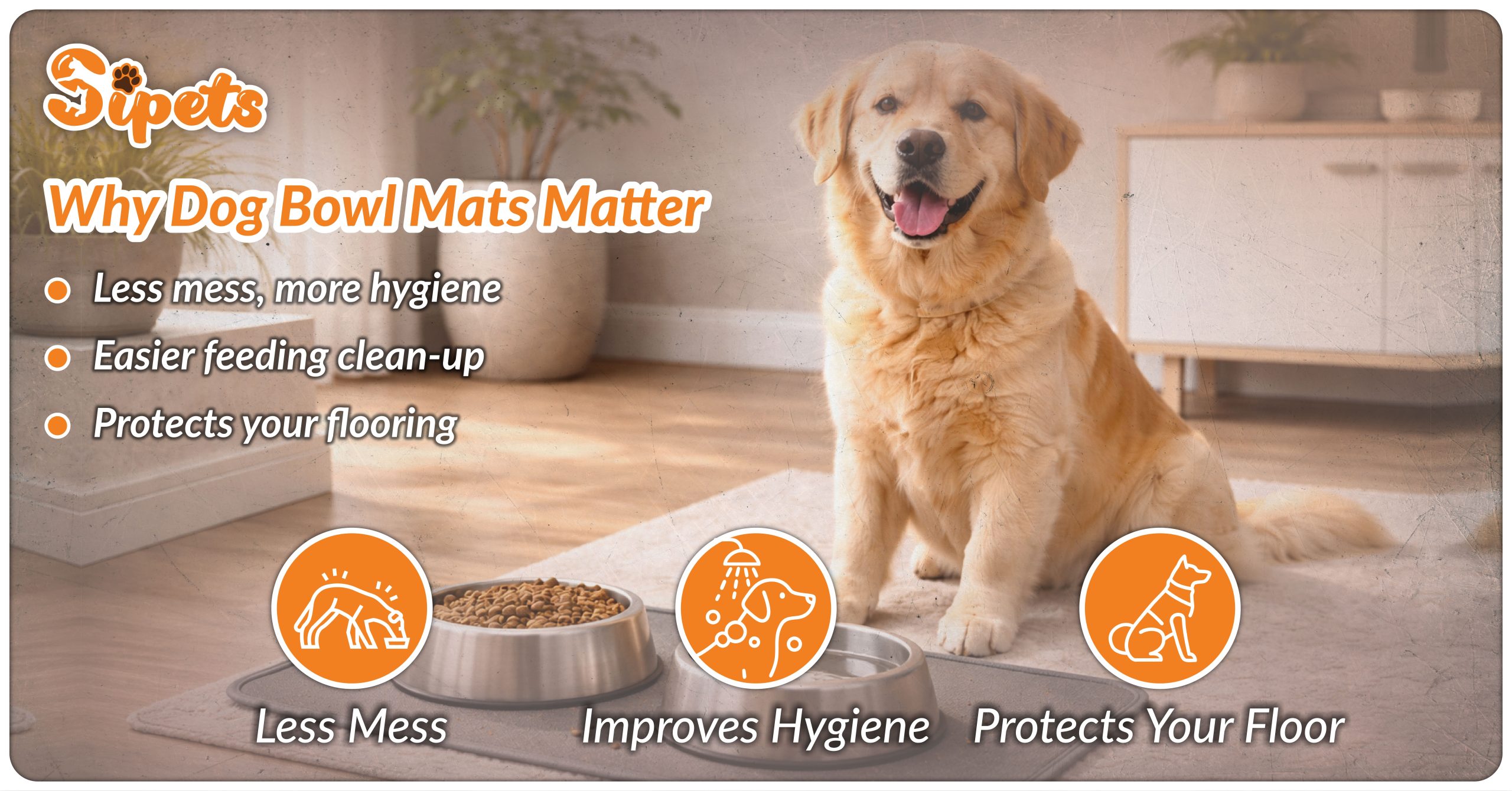
Less mess, instantly
Dogs don’t drink politely. Water sloshes, food drops, bowls slide. A mat catches all of that before it reaches your floor — whether it’s tiles, laminate or carpet.
Bowls stay where they’re meant to
Without a mat, bowls creep. Especially with enthusiastic eaters. A good mat adds grip, keeping everything in place instead of halfway under the table.
Easier daily cleaning
Instead of scrubbing the floor after every meal, you wipe or rinse the mat. That’s it. Feeding time becomes a one-step clean-up.
Protects your flooring
Repeated water spills can damage wooden floors and leave marks on laminate. Mats act as a barrier, extending the life of your flooring.
In short: a bowl mat turns feeding from “constant maintenance” into something you barely think about.
Do dog bowl mats really help with hygiene?
Yes — and this is where they quietly earn their keep.
Food and water spills left directly on the floor become breeding grounds for bacteria, especially in warmer months. Add damp paws and repeated spills, and it’s not ideal.
A bowl mat:
- Creates a dedicated feeding zone
- Stops moisture soaking into floors
- Prevents food residue spreading
- Makes regular cleaning easier and more consistent
When you can quickly rinse or wipe something clean, you’re far more likely to do it daily — which keeps feeding areas fresher overall.
Are silicone dog bowl mats better than other types?
For most homes, yes — and there’s a reason silicone has become the go-to material.
Why silicone works so well
Non-slip by nature
Silicone grips surfaces better than fabric or plastic. Bowls stay put, even with eager eaters.
Waterproof and spill-proof
Silicone doesn’t absorb moisture. Spilled water stays contained instead of seeping through.
Easy to clean
Wipe it, rinse it, or pop it under the tap. No deep cleaning, no drying time.
More hygienic
Unlike fabric mats, silicone doesn’t trap smells, crumbs or bacteria.
Durable for daily use
Silicone mats don’t fray, crack or warp easily — even with regular washing.
This is why Sipets silicone bowl mats are designed the way they are: simple, flexible, easy to clean, and tough enough for daily feeding routines.
Do bowl mats help with fast eaters and messy drinkers?
They do — indirectly, but effectively.
For fast eaters:
- Mats prevent bowls from sliding away mid-meal
- Food that spills stays contained, reducing frantic chasing
For messy drinkers:
- Raised edges catch splashes
- Water stays on the mat instead of spreading across the floor
While a mat won’t slow a dog down on its own, it controls the chaos around them, which makes feeding calmer overall.
Where should you place a dog bowl mat?
This sounds obvious, but placement matters more than people think.
Best spots include:
- Kitchen corners
- Utility rooms
- Feeding stations near back doors
- Anywhere with easy floor access for cleaning
Avoid placing bowls directly against walls without a mat — splashes tend to bounce back and mark paint or skirting boards over time.
A mat creates a clear “feeding zone” that keeps everything contained.
Are bowl mats suitable for all dogs?
Pretty much, yes.
They’re especially useful for:
- Puppies learning to eat and drink
- Senior dogs who spill more
- Flat-faced breeds that push bowls around
- Multi-pet households
- Indoor dogs with set feeding areas
Whether you’ve got a tiny terrier or a larger breed, a properly sized silicone mat makes feeding cleaner and more controlled.
Why Sipets silicone bowl mats make sense for UK homes
UK homes tend to have:
- Mixed flooring (tiles, laminate, wood)
- Smaller kitchens
- Indoor feeding areas
- Year-round muddy paws
Sipets silicone bowl mats are built with that reality in mind:
- Non-slip for smooth floors
- Waterproof for daily spills
- Easy to rinse after muddy days
- Simple design that doesn’t dominate the space
They’re not over-engineered. Just practical — which is exactly what a feeding accessory should be.
The underrated benefit: routine
One thing people don’t talk about enough is how bowl mats help with routine.
Dogs thrive on predictability. When food and water always live in the same spot, on the same mat, feeding becomes calmer and more familiar.
It’s a small thing — but it contributes to better habits over time.
Final thoughts: Are dog bowl mats worth it?
If feeding time feels messy, repetitive or annoying — yes, absolutely.
A silicone dog bowl mat:
- Reduces mess
- Improves hygiene
- Protects your floors
- Saves time
- Makes daily life easier
It’s not flashy. It’s not exciting.
But it’s one of those accessories you stop noticing — because it’s doing its job quietly, every single day.
FAQs
Do I really need a bowl mat if my dog eats neatly?
Even tidy dogs spill occasionally. A mat protects your floor and makes cleaning quicker.
Are silicone bowl mats safe for pets?
Yes. Quality silicone mats are non-toxic and safe for everyday use.
Can I wash the mat every day?
Absolutely. Silicone mats are designed for frequent rinsing or wiping.
Will the mat move on tiled or laminate floors?
No — silicone naturally grips smooth surfaces, keeping bowls in place.
Is one mat enough for food and water bowls?
Yes. Most silicone mats are sized to hold both bowls comfortably.