- Your cart is empty
- Continue Shopping

How to Clean Dog Grooming Tools Properly
-
By Yash
- Posted on
- 0 comments
- Grooming & Hygiene
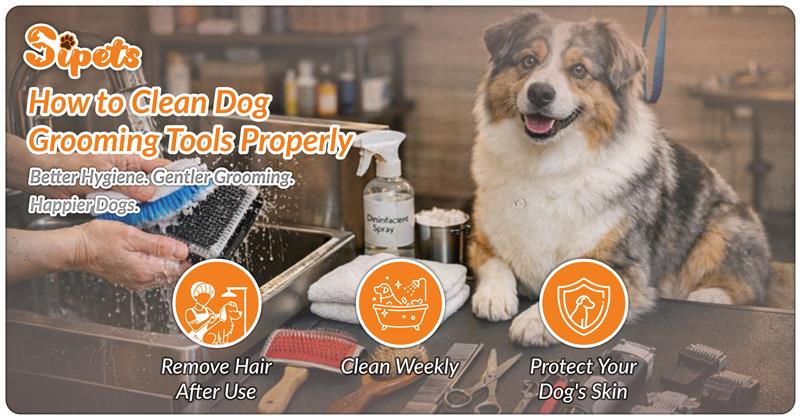
If you groom your dog at home, even just the basics like brushing or trimming nails, there’s one thing that’s very easy to ignore: cleaning the tools afterwards.
Most people focus on keeping their dog clean — baths, brushes, wipes — but forget that dirty grooming tools can undo all that effort. Hair, oils, skin flakes and bacteria build up quietly, and before you know it, you’re brushing your dog with something that’s anything but clean.
Learning how to clean dog grooming tools properly isn’t about being fussy. It’s about good grooming hygiene, keeping your dog comfortable, and making sure your tools actually work the way they’re meant to.
Why Dirty Grooming Tools Can Be a Problem
Every time you groom your dog, your tools pick up more than just loose fur. Natural oils, dirt from walks, tiny bits of dead skin — it all clings on.
If tools aren’t cleaned regularly:
- Brushes become less effective
- Clippers pull instead of glide
- Bacteria gets transferred back onto your dog
Over time, this can lead to itchy skin, irritation, or even minor infections. From a pet care cleaning point of view, clean tools are just as important as a clean dog.
How Often Should You Clean Dog Grooming Tools?
A Quick Clean After Every Use
This doesn’t need to be a big job. A few seconds makes a difference.
After each grooming session:
- Pull hair out of brushes and combs
- Wipe down scissors or clipper blades
- Leave everything to air-dry
This stops grime from building up in the first place.
A Proper Clean Once a Week (or Fortnight)
If you groom your dog regularly, a deeper clean once a week is ideal. If grooming is occasional, every couple of weeks is usually enough.
How to Clean Dog Grooming Tools at Home
Brushes and Combs
Start by removing all trapped hair. This alone improves how the brush works.
Then:
- Fill a bowl with warm (not hot) water
- Add a small amount of dog shampoo or mild washing-up liquid
- Soak brushes and combs for 10–15 minutes
- Gently scrub with an old toothbrush
- Rinse thoroughly and leave to air-dry
If your brush has a wooden handle, don’t soak it for too long — wood doesn’t love water.
Clippers and Trimmers
Clippers need a bit more care, but it’s still straightforward.
After each use:
- Brush away loose hair
- Wipe the blade with a clean, dry cloth
For a deeper clean:
- Remove the blade if possible
- Use clipper cleaner or rubbing alcohol
- Dry completely
- Apply a drop of clipper oil before reattaching
Never rinse electric clippers under the tap — water and motors never end well together.
Nail Clippers and Scissors
These come into close contact with skin, so grooming hygiene really matters here.
To clean them:
- Wash with warm, soapy water
- Disinfect with alcohol wipes or spray
- Dry fully to prevent rust
A tiny drop of oil on the hinge keeps them moving smoothly.
Don’t Forget Towels, Mats and Surfaces
It’s easy to clean your tools and forget what you’re using them on.
Towels and grooming mats:
- Should be washed after every use
- Need to dry completely before being reused
Clean tools placed on a dirty surface don’t stay clean for long.
Common Mistakes People Make
Using Harsh Chemicals
Strong disinfectants or bleach can leave residues that irritate your dog’s skin. Mild, pet-safe cleaning products are more than enough for routine pet care cleaning.
Putting Tools Away Damp
Even slightly damp tools can rust or develop unpleasant smells. Always let them dry fully before storing.
Cleaning Only When They Look Dirty
By the time tools look dirty, bacteria has already built up. Regular cleaning prevents problems before they start.
Storing Your Tools Properly
Once tools are clean, storage matters.
- Keep them somewhere dry
- Avoid sealing damp tools in plastic boxes
- Store clean tools separately if possible
Good habits here keep tools hygienic for longer.
Making Cleaning Part of Your Grooming Routine
The easiest way to stay consistent is to make cleaning automatic.
A simple routine:
- Groom your dog
- Clean tools straight away
- Put them away ready for next time
It takes a few minutes and saves a lot of hassle later.
Final Thoughts: Clean Tools Make Grooming Easier
Keeping your grooming tools clean isn’t about being perfect or doing things “by the book”. It’s simply about making grooming kinder — for you and for your dog.
When tools are clean, they work the way they’re meant to. Brushes glide more smoothly, clippers feel gentler on the skin, and you’re far less likely to cause irritation without realising it. Paying a bit of attention to grooming hygiene also helps prevent small skin problems before they ever become an issue.
With a few easy habits in place, learning how to clean dog grooming tools becomes second nature. And when everything feels calmer, safer, and more comfortable, grooming stops feeling like a chore and turns into something you and your dog can actually enjoy together.