- Your cart is empty
- Continue Shopping

How to Keep Your Dog Comfortable During Hot Weather
-
By Yash
- Posted on
- 0 comments
- Pet Care & Health
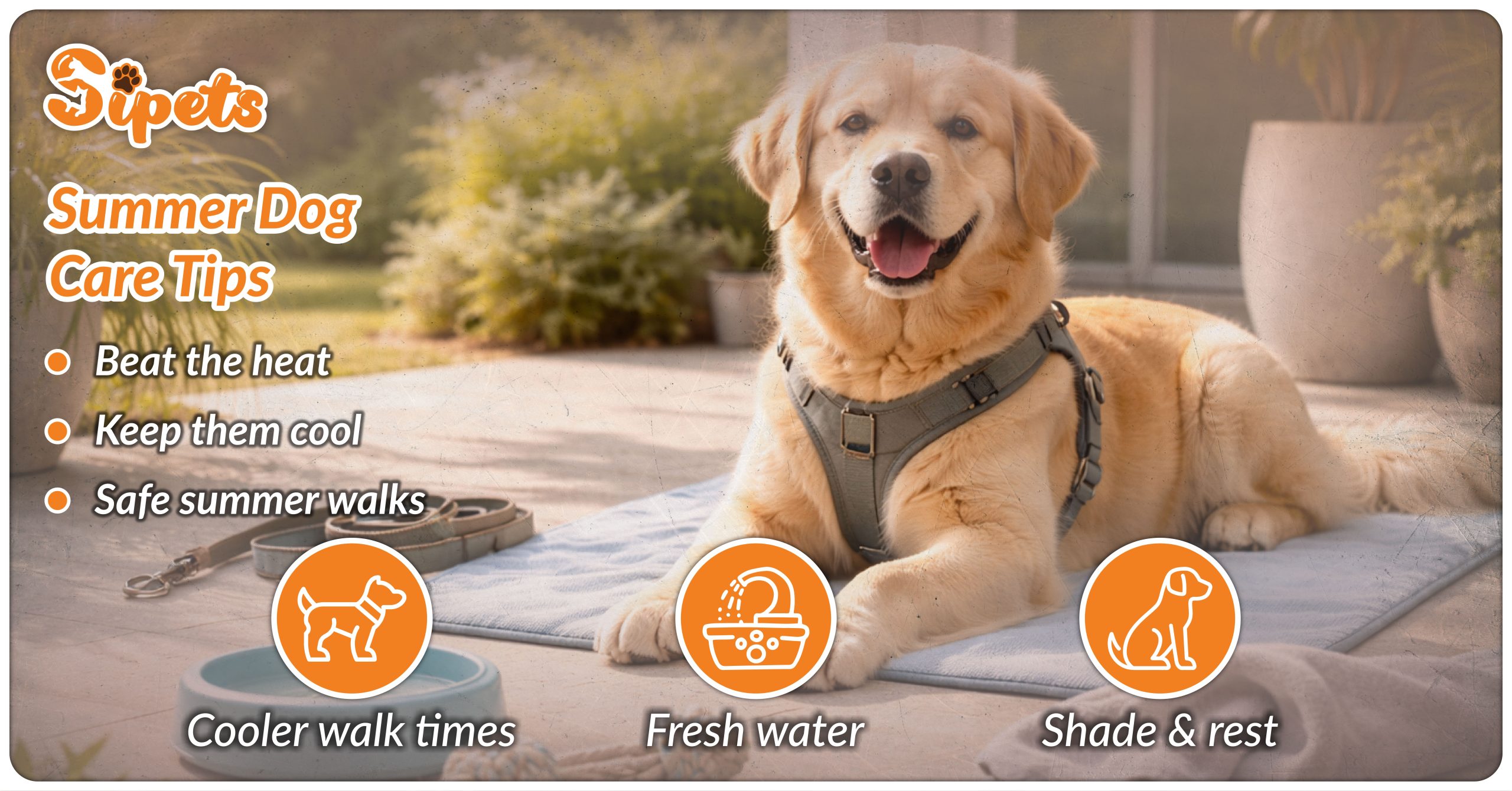
Every summer, it catches us out a little. One minute it’s grey skies and jumpers, the next the sun’s blazing, the pavements feel warm underfoot, and your dog is lying flat on the kitchen floor like they’ve given up on life altogether.
Hot weather can be uncomfortable for anyone — but for dogs, it’s genuinely harder. They can’t tell us when they’re struggling, they can’t cool themselves the way we do, and they rely entirely on us to make sensible choices for them.
Good dog summer care isn’t about panic or doing everything perfectly. It’s about noticing the signs, making small adjustments, and putting your dog’s comfort ahead of routine when temperatures rise.
Why Heat Is a Bigger Deal for Dogs Than We Realise
Dogs Don’t Cool Down Like Humans
We sweat. Dogs don’t — at least not in any helpful way. They cool themselves mainly through panting and by releasing heat through their paws. When the air is warm and still, that system struggles.
That’s why heat safety for dogs matters even on days that don’t feel extreme to us. What feels like “nice weather” can be overwhelming for them.
Some Dogs Are More Vulnerable
Flat-faced breeds, older dogs, puppies, overweight dogs, and those with thick coats or health conditions feel the heat more intensely. But even fit, young dogs can overheat faster than you’d expect.
Walking Your Dog in Summer: Timing Is Everything
Early Morning or Late Evening Only
If you take one thing away from this, let it be this: shift your walks.
Early morning and later in the evening are safer and far more comfortable. Midday walks, even short ones, can push dogs past their limit.
A simple rule most UK vets agree on:
If the pavement feels hot to your hand, it’s too hot for paws.
Shorter Walks Are Not a Failure
In summer, shorter, slower walks are often kinder. Let your dog sniff, take breaks, and set the pace. Exercise isn’t just about distance — mental stimulation counts too.
Keeping Your Dog Cool at Home
Create Cool Zones
Dogs are brilliant at finding the coldest spot in the house — tiles, shaded corners, under tables. Help them out by:
- Keeping curtains closed during peak heat
- Using fans safely (never directly on them for long periods)
- Letting them choose where they rest
Cooling mats can help some dogs, but don’t force them. Comfort should always be their choice.
Fresh Water, All Day
This sounds obvious, but it’s easy to forget how quickly bowls empty in hot weather.
Top up water several times a day, wash bowls regularly, and place extra bowls around the house if needed. Some dogs drink more when water is nearby rather than in one fixed spot.
Feeding Adjustments During Hot Weather
Appetite Changes Are Normal
Many dogs eat less when it’s hot. That doesn’t automatically mean something’s wrong.
Try feeding earlier in the morning or later in the evening when it’s cooler. If meals are skipped occasionally but your dog seems otherwise fine, don’t panic.
Avoid Heavy Treats
Rich treats can make dogs feel sluggish in the heat. Lighter snacks, frozen fruit safe for dogs, or ice cubes with a splash of low-salt broth can be refreshing alternatives.
Signs Your Dog Is Overheating (And When to Act)
Early Warning Signs
Watch for:
- Heavy, constant panting
- Restlessness or pacing
- Drooling more than usual
- Seeking shade or refusing to move
These are your cues to stop activity immediately.
Serious Symptoms — Act Fast
If you notice:
- Lethargy or collapse
- Vomiting
- Disorientation
- Bright red gums
Move your dog somewhere cool straight away and contact your vet. Heatstroke is a medical emergency.
Car Safety: No Exceptions
Even on a “mild” UK day, cars heat up frighteningly fast. Cracking a window does nothing.
If you wouldn’t sit in a parked car yourself, don’t expect your dog to cope. Not for five minutes. Not ever.
This is one of the most important parts of heat safety for dogs — and sadly, one of the most overlooked.
Grooming Myths in Summer
Don’t Shave Without Advice
Many coats actually insulate dogs from heat. Shaving can make things worse and expose skin to sunburn.
Regular brushing to remove loose fur is far more helpful than cutting it all off. If you’re unsure, ask a groomer or vet before making changes.
Summer Is About Slowing Down — And That’s Okay
Hot weather isn’t the time for pushing routines or feeling guilty about doing less.
Dogs don’t measure love by walk length or activity levels. They measure it by comfort, safety, and being looked after.
Good dog summer care often means:
- Fewer plans
- Gentler days
- More rest
And that’s not lazy — it’s responsible.
Final Thoughts: Your Dog Depends on You in the Heat
Summer should be enjoyable, not stressful. With a bit of awareness and flexibility, it can be.
If you’re watching the temperature, adjusting your routine, offering water, shade, and patience — you’re doing right by your dog.
They don’t need beach days or big adventures. They need you to notice when it’s too much and step in quietly.
That’s real care. And in hot weather, it matters more than anything.