- Your cart is empty
- Continue Shopping
Slow Feeder Dog Bowls
-
By Yash
- Posted on
- 0 comments
- Uncategorized
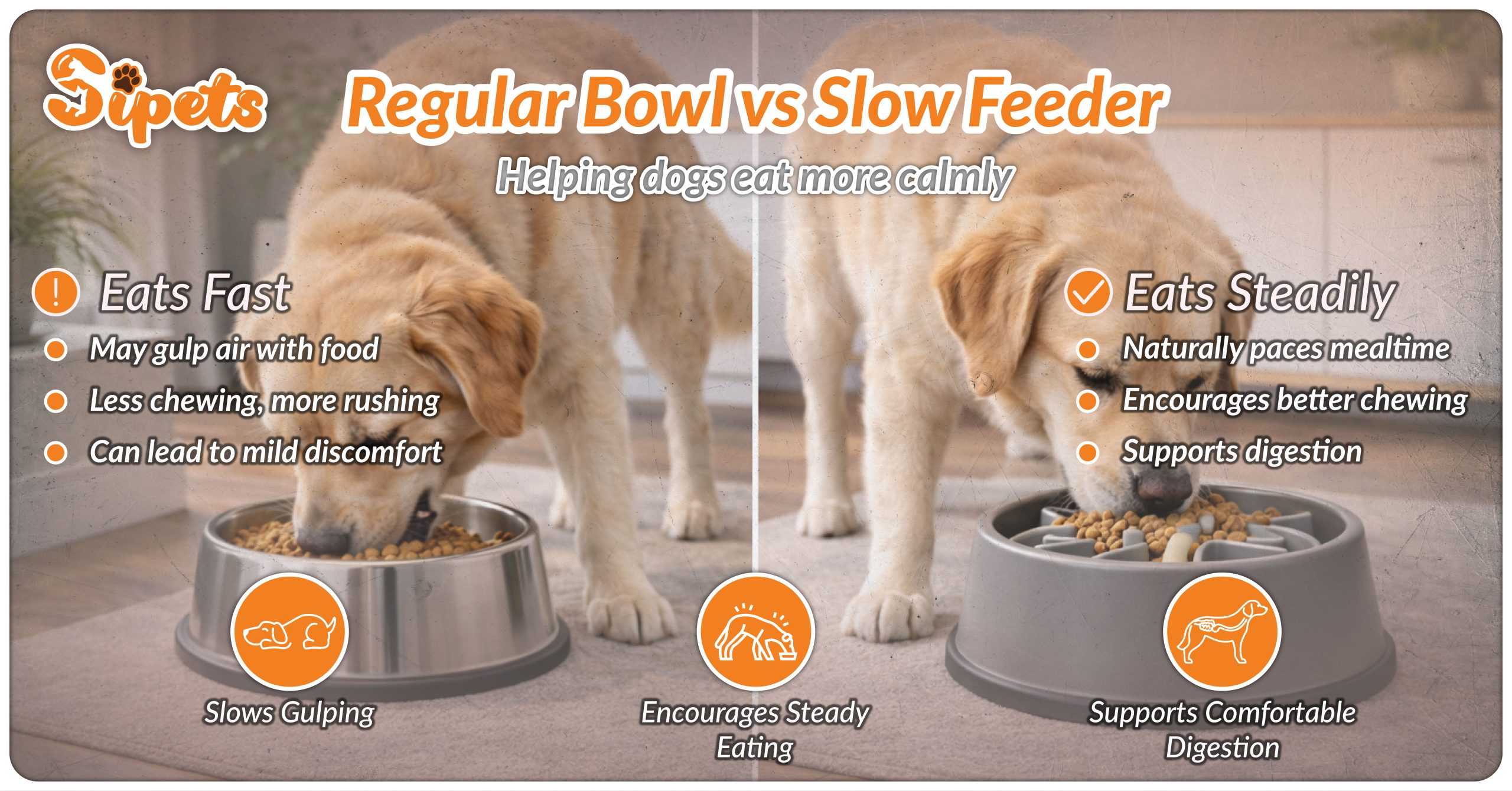
If your dog finishes dinner before you’ve even put the kettle on, you’re not alone.
Some dogs approach mealtimes with the enthusiasm of someone who hasn’t eaten in days. Bowl down, head in, food gone. It’s impressive. Slightly chaotic. And sometimes followed by a bit of pacing, the odd hiccup, or that “did I really eat already?” expression.
That’s usually when slow feeder dog bowls enter the conversation.
They’re not a fad. They’re not a gimmick. They’re simply a practical way to help certain dogs eat at a more comfortable pace — without turning feeding into a training session.
Let’s talk about what they actually are, how they work, and whether they’re right for your dog.
What Is a Slow Feeder Dog Bowl?
A slow feeder dog bowl is designed with raised ridges, curves or patterns built into the base. Instead of a smooth, open surface where food can be scooped up in seconds, the shape gently separates the food into sections.
Your dog still gets the same meal.
They just can’t gulp it quite as quickly.
There’s no complicated mechanism. No moving parts. No timers. It’s simply a differently shaped bowl that naturally encourages slower eating.
How Slow Feeders Work (In Real Life)
Think of it like this.
A regular bowl allows your dog to lower their head and take mouthful after mouthful in one go.
A slow feeder breaks that rhythm slightly.
Because food sits between ridges or around curves, your dog:
- has to move their tongue around more
- takes smaller mouthfuls
- pauses naturally between bites
- works a little bit for each piece
It’s not frustrating. It’s just different.
That small change in pace can make mealtimes feel steadier and more controlled — especially for enthusiastic eaters.
Do Slow Feeders Actually Work?
In many cases, yes — and quite noticeably.
Owners often say the difference is clear from the first meal. Instead of inhaling food in under a minute, dogs take a few extra minutes to finish.
That might not sound dramatic, but those extra minutes allow:
- better chewing
- less rushing
- a calmer post-meal feeling
- less mess around the bowl
Slower eating can also support more comfortable digestion. When dogs don’t gulp as much air with their food, they often seem more settled afterwards.
It’s not about solving a crisis. It’s about improving a routine.
Are Slow Feeders Safe?
Yes — when chosen properly and used as intended.
A good slow feeder bowl should:
- be made from pet-safe materials
- feel sturdy and stable
- suit your dog’s size and muzzle shape
- be easy to clean
The design should challenge your dog gently, not frustrate them.
Most dogs adapt very quickly. The first meal might involve a bit of investigation and head-tilting, but they usually work it out within minutes.
If your dog ever seems confused or hesitant, simply stay nearby and let them take their time. There’s no rush.
Who Should Use a Slow Feeder?
Not every dog needs one — and that’s fine.
But they’re especially helpful for:
Fast Eaters
Dogs who finish meals in seconds and immediately look for more.
Large Breeds
Bigger dogs often eat quickly simply because they can.
Puppies Learning Habits
Starting with slower eating patterns early can support steady routines.
Multi-Dog Homes
When one dog eats much faster than another, a slow feeder can help balance mealtimes.
If you’re unsure whether your dog’s eating speed is something to address, our guide on Best Bowls for Fast Eaters explores the signs and options in more detail.
Slow Feeder vs Puzzle Feeder
This is a common question.
They’re similar in idea — but not quite the same.
Slow Feeder Bowl
- Used for regular meals
- Built-in ridges
- Designed to slow eating slightly
- Simple and consistent
Puzzle Feeder
- Designed as enrichment
- Often involves moving pieces
- More complex
- Not always practical for daily feeding
If your goal is calmer everyday meals, a slow feeder bowl is usually the simpler and more practical choice.
Puzzle feeders are brilliant for mental stimulation — but they’re not always ideal for breakfast before work.
What Makes a Good Slow Feeder Bowl?
Not all designs are equal.
Look for:
A Stable Base
Non-slip bottoms prevent the bowl sliding across the floor mid-meal.
Appropriate Depth
Too shallow and it won’t slow eating.
Too deep and it may feel awkward.
Easy Cleaning
Smooth, pet-safe materials that don’t trap residue.
The Right Size
A bowl that matches your dog’s portion size and muzzle shape.
For example, broad-faced breeds may prefer wider patterns, while smaller dogs benefit from shallower designs.
Will It Frustrate My Dog?
This is a fair concern.
In most cases, dogs adjust quickly. What seems confusing at first becomes routine by the second or third meal.
If your dog gets overly excited at feeding time, the slight challenge can actually make things feel more balanced.
The key is choosing a design that’s appropriate — not overly complicated.
Remember: it’s about slowing, not blocking.
Feeding Tips When Starting With a Slow Feeder
Keep it simple.
- Start with a normal portion
- Stay nearby for the first few meals
- Keep the feeding area calm
- Avoid introducing it during a particularly rushed or stressful moment
Most dogs adapt smoothly when the environment feels steady.
If you ever feel unsure, you can mix half the meal in a regular bowl and half in the slow feeder for a few days before switching fully.
There’s no “right” speed for transitioning.
Beyond Digestion: Other Benefits
Many owners notice small but welcome changes beyond just slower eating.
Less Spillage
Because dogs aren’t lunging into the bowl, food often stays inside it.
Quieter Mealtimes
Less frantic movement means less clattering.
More Engagement
The gentle challenge can make meals feel a bit more interactive.
It’s a small shift — but small shifts add up.
Do All Dogs Need One?
No.
Some dogs naturally eat at a relaxed pace. If your dog chews thoroughly and finishes calmly, a regular bowl may be perfectly fine.
A slow feeder is a tool — not a requirement.
But for the right dog, it can make everyday feeding noticeably smoother.
Final Thoughts
A slow feeder dog bowl isn’t about controlling your dog’s behaviour. It’s about supporting a calmer, more comfortable way to eat.
For dogs who rush their meals, that small change in design can quietly transform feeding time — making it steadier, less messy and more settled afterwards.
It doesn’t need to feel dramatic. It doesn’t need to feel complicated.
Sometimes, slowing things down just a little is enough.
FAQs
What is a slow feeder dog bowl?
It’s a bowl with built-in ridges that naturally slow how quickly your dog eats.
Do slow feeders really help with fast eating?
Yes — most dogs take longer to finish their meals when using one.
Are slow feeders safe for puppies?
Yes, as long as the design suits their size and isn’t too deep.
Can I use a slow feeder for wet food?
Absolutely. They work for both wet and dry food.
How do I clean a slow feeder bowl?
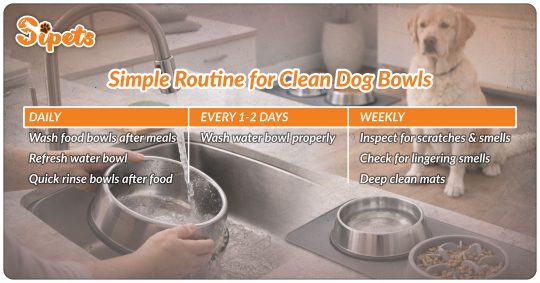
Wash daily with warm, soapy water, or use the dishwasher if it’s labelled safe.