- Your cart is empty
- Continue Shopping

Stainless Steel Dog Bowls Benefits
-
By Yash
- Posted on
- 0 comments
- Uncategorized
Walk into almost any vet clinic in the UK and take a quick glance around.
Chances are, the water bowls you’ll see sitting in waiting rooms are stainless steel.
That’s not an accident.
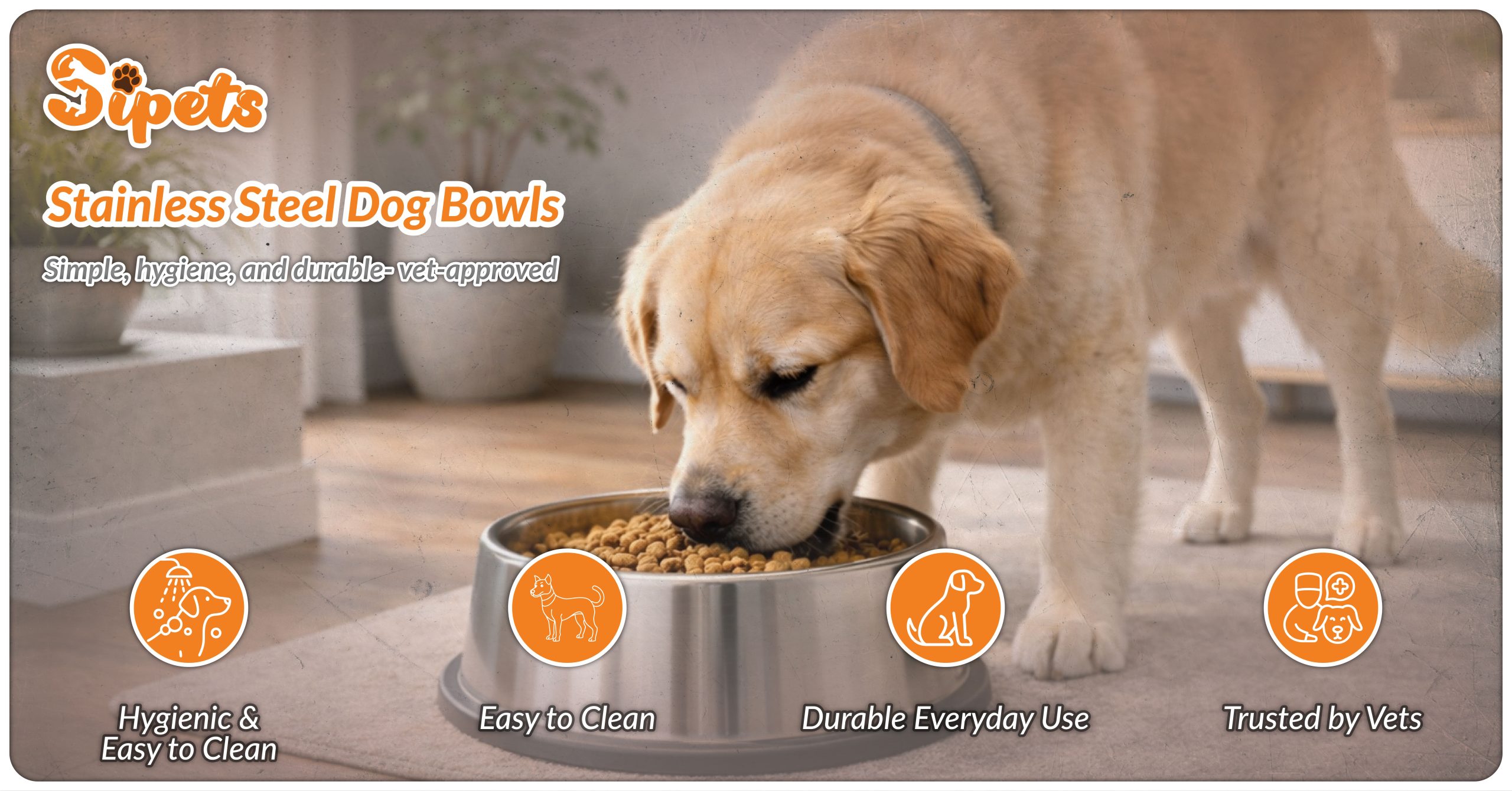
When it comes to everyday feeding, stainless steel dog bowls have quietly become the standard. They’re not flashy. They’re not trendy. They don’t come in endless patterns. But they do one thing extremely well: they work.
If you’ve ever wondered why so many dog bowls are stainless steel — and whether they’re actually better — this guide will walk you through it properly, in plain English.
Why Are So Many Dog Bowls Made From Stainless Steel?
It mostly comes down to practicality.
Stainless steel is:
- Non-porous
- Easy to clean
- Resistant to rust
- Durable
- Lightweight but sturdy
In other words, it’s made for daily use.
Dog bowls are handled twice a day (at least). They’re filled, emptied, washed, dropped, nudged, and sometimes chewed. Stainless steel handles that kind of routine without fuss.
That’s why manufacturers use it so often — not because it looks impressive, but because it performs reliably.
Are Stainless Steel Bowls Healthy for Dogs?
In short: yes.
One of the biggest advantages of stainless steel is that it doesn’t absorb moisture, oils, or food residue. Because it’s non-porous, it doesn’t trap bacteria the way scratched plastic sometimes can.
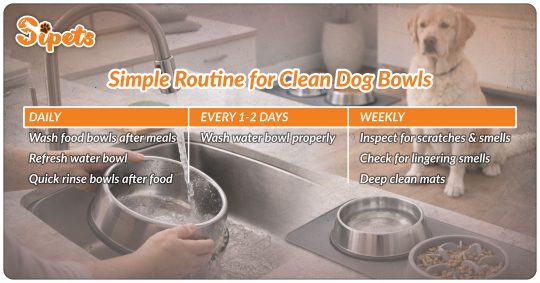
That makes it easier to keep hygienic with simple daily washing.
When bowls are cleaned regularly — whether by hand or in the dishwasher — stainless steel supports good feeding hygiene without any extra effort.
If hygiene is something you’ve been thinking about, you might also find our guide on Ceramic vs Stainless Steel Dog Bowls helpful, as it breaks down how the materials compare in more detail.
Do Vets Recommend Stainless Steel Bowls?
Many vets do.
That recommendation usually isn’t about marketing — it’s about cleanliness and durability.
In clinical environments, materials that are:
- Easy to sanitise
- Resistant to cracking
- Not prone to harbouring bacteria
…are simply more practical.
Stainless steel fits that description well.
It’s not that ceramic or other materials are “bad”. It’s just that stainless steel is predictable, long-lasting, and straightforward to keep clean.
For most everyday households, that reliability matters.
Is Stainless Steel Better Than Plastic?
For many dogs, yes.
Plastic bowls are lightweight and affordable, but over time they can develop fine scratches. Those tiny marks are invisible at first, but they can hold onto residue and odours.
Stainless steel doesn’t scratch in the same way under normal use. It keeps its smooth surface, which makes it easier to wash thoroughly.
It also doesn’t absorb smells. If you’ve ever noticed a bowl that still smells faintly of yesterday’s meal, material is usually the reason.
That’s why so many owners upgrade from plastic to steel once they’ve tried both.
Hygiene Benefits of Stainless Steel
Easy Daily Cleaning
Stainless steel bowls rinse clean quickly. Food residue doesn’t cling stubbornly, and they’re usually dishwasher safe.
That makes it easier to stay consistent — and consistency is what keeps feeding areas fresh.
No Odour Retention
Because the surface is smooth and non-porous, smells don’t soak in.
Even after wet food, raw feeding, or oily meals, a proper wash leaves the bowl neutral again.
Reliable for Water Bowls
Water bowls are often overlooked, but they’re just as important as food bowls. Stainless steel handles constant refilling and daily washing without dulling or staining.
Durability: Built for Real Life
Let’s be honest. Dog bowls get knocked.
They’re kicked accidentally, pushed around by enthusiastic eaters, and sometimes dropped during washing.
Stainless steel doesn’t crack like ceramic can. It doesn’t warp in hot water. It doesn’t fade.
That long-term durability makes it a sensible investment, especially for large or energetic dogs.
Pros and Cons of Stainless Steel Dog Bowls
Pros
- Hygienic and non-porous
- Easy to clean
- Dishwasher safe (in most cases)
- Long-lasting
- Rust-resistant
- Lightweight yet sturdy
- Affordable for the quality
Cons
- Can slide if no non-slip base
- Not as decorative as ceramic
- Can feel cold to the touch (though this doesn’t affect dogs)
In practice, most of these are minor considerations. If sliding is an issue, placing the bowl on a mat usually solves it instantly.
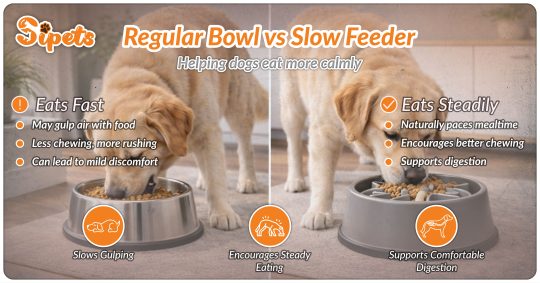
Stainless Steel and Slow Feeder Designs
If your dog eats quickly, stainless steel can still be part of the solution.
Some slow feeder bowls are made with stainless steel components or inserts, combining hygiene with controlled feeding patterns.
Slow feeder bowls work by adding raised sections inside the bowl, encouraging dogs to eat at a steadier pace. When made from steel or paired with a steel outer structure, they maintain the same durability and easy-clean benefits.
This makes them ideal for:
- Fast eaters
- Larger breeds
- Dogs who benefit from slower feeding
- Households that prioritise hygiene
Stainless steel doesn’t limit your options — it adapts to them.
Why Stainless Steel Works So Well in UK Homes
UK homes tend to deal with:
- Damp weather
- Indoor heating
- Muddy paws
- Year-round bowl use
Stainless steel handles moisture without rusting and doesn’t absorb the environment around it. That makes it particularly suited to everyday British routines.
It’s practical. And practicality tends to win long-term.
When Stainless Steel Is the Best Choice
Stainless steel bowls are especially suitable for:
- Puppies (easy to clean, durable)
- Large dogs (hard-wearing)
- Raw feeders (easy sanitation)
- Households with multiple pets
- Owners who prefer low-maintenance products
It’s not about trend — it’s about reliability.
A Quick Word on Quality
Not all stainless steel is identical.
Look for:
- Food-grade stainless steel
- Smooth finishes
- Solid construction
- Non-slip bases where possible
A well-made bowl should feel sturdy but not heavy, smooth but not flimsy.
Sipets stainless steel bowls are designed with daily use in mind — practical, easy to clean, and built to last without overcomplicating the design.
Final Thoughts
Stainless steel dog bowls aren’t exciting — and that’s part of their charm.
They’re reliable. Hygienic. Durable. Easy to live with.
For many dog owners — and many vets — that combination is enough to make them the go-to choice.
If you’re looking for something that supports good hygiene, lasts for years, and handles daily feeding without drama, stainless steel quietly ticks all the boxes.
And sometimes, simple really is best.
FAQs
Are stainless steel bowls safe for puppies?
Yes. They’re durable, easy to clean, and suitable for all life stages.
Can stainless steel bowls go in the dishwasher?
Most can, but always check the product details to be sure.
Do stainless steel bowls rust?
Food-grade stainless steel is rust-resistant when cared for properly.
Are they suitable for raw feeding?
Yes. They’re easy to wash and don’t absorb residue.
Do dogs prefer stainless steel?
Dogs usually adapt to whatever feels stable and comfortable. Material rarely affects preference if the bowl is clean and secure.